
AI News, 16 June 2026: Who's Really in Control of Your AI?
Most firms cannot say who owns their AI agents. Plus Nadella on owning your AI, Nvidia's 25 billion dollar bond, and why vendor claims need checking.
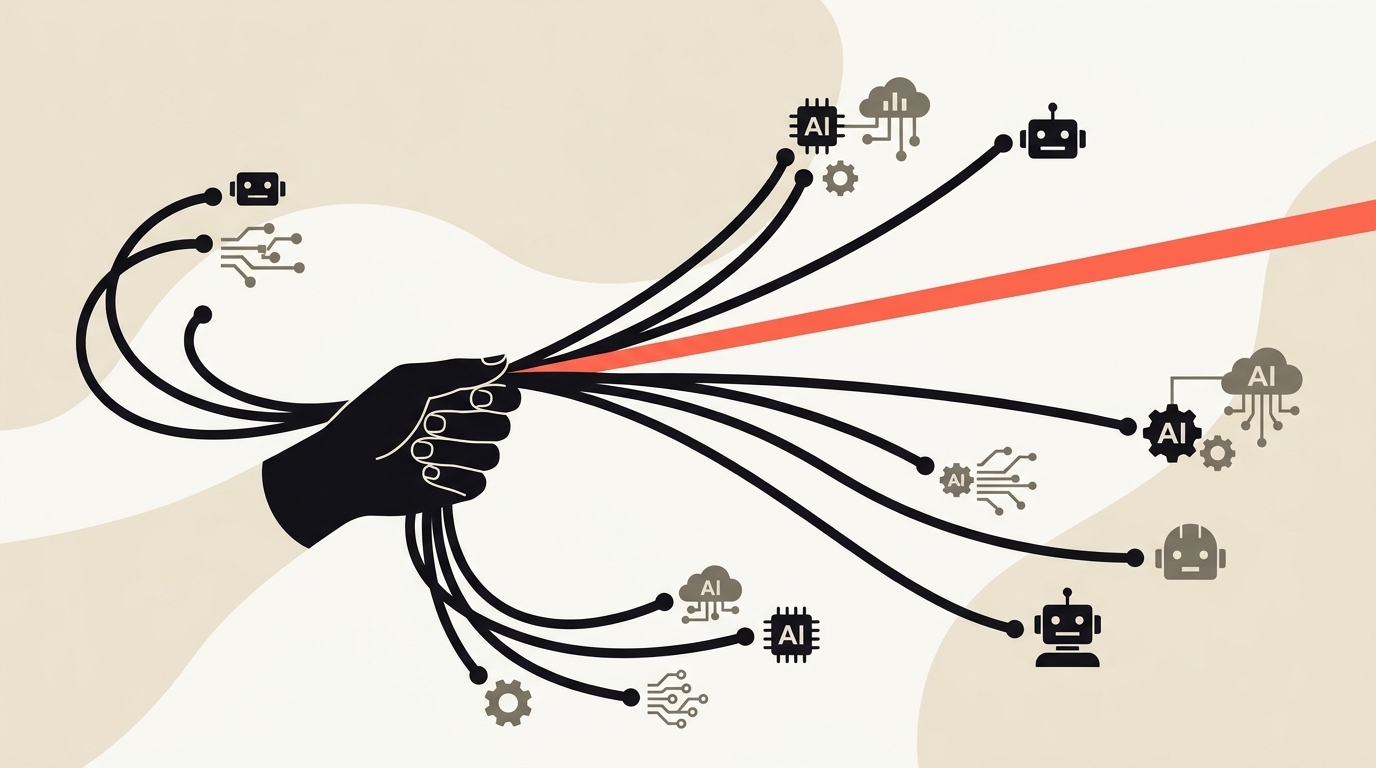
Today is about two things: control and scepticism. Who owns the AI already running inside your business, who profits from the story being told about it, and which claims actually stand up. Several of today’s stories come from companies with something to sell, so we have flagged that where it matters. Here are the five that count for your business.
In a nutshell: Research from a software vendor says most companies cannot name who owns their AI agents, and independent bodies broadly agree the governance gap is real. A Japanese startup claims an agent that writes 100-page strategy reports overnight, though the claim is untested. Microsoft’s chief executive argues you should own your AI capability, which is sensible advice from a company that sells you the tools to do it. A vendor explainer makes the case for being able to explain AI decisions. And Nvidia borrowed twenty-five billion dollars, with analysts split on whether that is confidence or a warning.
1. Most companies cannot say who owns their AI
 What happened: Ivanti, an IT software vendor, published research surveying 3,900 employees across six countries, reported by VentureBeat. It found 85 percent of IT professionals claim every AI agent in their organisation has a named owner, but only 42 percent say that ownership is actually clear. That is a 43-point gap. The same research found leaders are nearly twice as likely to hide their own AI use as regular staff (42 percent versus 23 percent), and of those who hide it, 52 percent said it was to keep a “secret advantage”.
Where sources agree: Independent work points the same way. The Cloud Security Alliance found more than two-thirds of organisations cannot clearly tell an AI agent’s actions from a human’s. IBM research found 67 percent of chief information and technology officers are held accountable for AI systems they do not fully control. So the broad picture, that AI is spreading faster than anyone is governing it, is well supported.
Where to be careful: Ivanti is not a neutral party. It sells IT security, service management and “agentic AI” governance tooling, so a survey showing ungoverned AI agents helps sell what it makes. Treat the exact figures as a vendor’s framing, even though the underlying trend is corroborated elsewhere.
What this means for you: Before your next board meeting, get a one-page list of every AI tool in use, who owns each one, and what data it touches. You cannot govern what you cannot see.
2. A startup claims an AI that writes a 100-page report overnight
 What happened: Tokyo startup Sakana AI launched Marlin, an agent it says runs unattended for up to eight hours and returns a report of 100 pages or more plus a slide deck, reported by VentureBeat and MarkTechPost. It is aimed at strategy, finance and consulting teams.
Be careful: These are the company’s own claims. The eight-hour, 100-page performance has not been independently tested, and some coverage notes the product has been in closed beta since April, so “launch” is doing some work here.
What this means for you: Tools like this can cheaply draft the groundwork for a market scan or strategy paper, but treat any output as a first draft to challenge, not a decision. A human still owns the call.
3. Microsoft’s CEO says own your AI, from the company that sells it
 What happened: In a long essay, Microsoft chief executive Satya Nadella warned of “a small number of AI systems capturing all the economic returns, while entire industries find their knowledge commoditised right out from underneath them”, as reported by The Decoder. His answer is “token capital”, the AI capability a company owns and controls alongside its human capital. The real prize, he argues, is building a learning loop on top of models so your own know-how compounds, not picking the best model.
Where sources agree: Coverage reads the message consistently, that firms should build an ecosystem and own their capability rather than just buy a model off the shelf.
Where to be careful: Remember who is speaking. Microsoft sells the models and the cloud they run on, so “own your AI capability” conveniently means “build it on our platform”. And the grand vision sits awkwardly with the markets, with Stocktwits noting Microsoft’s stock still trails its big-tech peers. The idea is sound; the source has an interest in you acting on it.
What this means for you: Pick one process where your own knowledge is the edge, and capture it into something you control, so the value builds up in your business rather than a platform’s.
4. A vendor argues “the AI decided” is no longer good enough
 What happened: A vendor explainer from Dataiku, which sells an AI platform including governance and explainability tooling, argues that when models shape decisions on credit scores, hiring and pricing, you must be able to explain why a model produced an output. It frames explainability as a basic requirement, not a nice-to-have.
Be careful: This is marketing from a company that sells the fix, so read it as a sales argument rather than neutral reporting. That said, the core point is fair, because regulators increasingly do expect explainability.
What this means for you: For any AI that affects a customer or an employee, make sure someone can explain the decision in plain English, whoever’s tool you use.
5. Nvidia borrows $25 billion, and the experts disagree on why
 What happened: Nvidia raised twenty-five billion dollars in its first bond sale since 2021, when it raised just five billion. Bloomberg and CNBC report it planned around twenty billion but lifted the amount to twenty-five billion after orders reached roughly eighty-five billion, more than three times the offer. The debt was sold in seven tranches with maturities stretching to 2056.
Where sources agree: Outlets agree demand was enormous and that this is one of the largest technology bond deals of the year.
Where they diverge: They split on what it signals. Bullish takes read it as confidence in years of AI growth. More sceptical coverage, including TheStreet, notes Nvidia’s shares dipped after the news and asks why the most cash-rich company in AI needs to borrow this much, pointing to the sheer scale of capital the AI build-out now demands and the debt piling up across the sector. It is too early to say which reading is right.
What this means for you: Expect providers to keep spending hard and competing for your business, which is good for your buying power. Do not lock into long AI contracts while the market is moving and repricing this fast.
The bottom line
The thread today is control and scepticism. Know who owns the AI in your business, own the capability where your knowledge is the edge, and check the claims, especially when they come from a company selling the cure. The leaders who stay in control of their AI, and keep a cool head about the hype, will be the ones still standing when the dust settles.
Want help putting AI to work in your business?
Reading the news is one thing. Knowing which of these moves actually applies to your business is another. If you want a straight, vendor-neutral view on where AI can save you time or make you money, book a free 15-minute discovery call and we will talk it through. No jargon and no hard sell.
Want to explore AI for your business?
Book a free discovery call to discuss how AI can streamline your operations and unlock new opportunities.
calendar_today Book a discovery callEnjoyed this? Get The Boardroom AI Brief.
Every Tuesday, the 10 AI developments that actually matter for SMEs. One short email. Free.
Free · no spam · unsubscribe any time

// WRITTEN BY
James Anderson
AI and full-stack engineer helping SME owners understand and implement AI. Founder of AI in Business and host of the AI in Business channel on YouTube.
Learn more about James →[ MORE ] RELATED READING
You might also like.



// NEXT MOVE
Get the AI news that matters, every week.
Join The Boardroom AI Brief. One free email every Tuesday: the AI developments that matter for your business, rated for relevance and explained in plain English.