
AI News, 20 July 2026: Netflix Pays $587m For An AI Startup
Netflix paid $587m for an AI post-production startup, a $600,000 CRM bill is under scrutiny, and new research shows AI users stop admitting doubt.

Five stories worth your attention today. The theme running through them is that the money keeps landing on unglamorous work, and the trouble keeps arriving dressed as certainty.
In a nutshell: Netflix has revealed in a regulatory filing that it paid $587 million in cash for Ben Affleck’s AI post-production startup, putting a real number on what AI tooling is worth to a company that actually makes things. A claim about a $600,000 software bill going to zero is doing the rounds, and the reported evidence underneath it is more useful than the headline. New research found that people given AI advice almost stopped saying “I don’t know”, got less accurate, and felt far more confident. Gartner reckons the AI tools sold to simplify IT will add complexity and outages before they pay off. And China’s president called for emergency response systems to keep AI in check, while arguing against the export controls that shape what your suppliers can sell you.
1. Netflix paid $587m for a post-production startup

Netflix has revealed in a new regulatory filing that it paid $587 million in cash for InterPositive, a startup co-founded by actor and director Ben Affleck. Netflix announced the acquisition back in March but did not disclose the financial terms at the time. A Bloomberg report had suggested the deal could be worth up to $600 million, so the filing has landed close to the estimate.
What InterPositive actually does is worth noting. By Affleck’s own description, its tools help filmmakers improve footage in post-production, particularly making up for real-world production problems such as missing shots, background replacements or incorrect lighting. In other words it repairs and finishes material that has already been shot. Affleck framed the sale around wanting to protect the power of human creativity, and he has joined Netflix as a senior adviser along with the rest of the InterPositive team. In its most recent earnings report, Netflix said around 300 of its titles have already used generative AI.
What this means for you: the biggest AI cheque in entertainment this year bought a repair shop for work that had already been done once. Have a look at where your own expensive rework sits, because that is where these returns keep landing.
Source: TechCrunch
2. The $600,000 CRM bill, and what is actually verified

A claim went round on X over the weekend, posted by investor Harry Stebbings, that a company had replaced Salesforce with a custom CRM built for its own workflows and cut a $600,000 annual software bill to zero. Stebbings put the claim in quotation marks and asked whether it was an anomaly or the start of something bigger. It has not been independently verified, and we would treat the number as a claim rather than a fact.
The reporting underneath the argument is firmer. Salesforce Ben, drawing on The Information, found several smaller firms moving off Salesforce, ServiceNow and HubSpot, with software cost reductions of 40% to 80%. Greenleaf Management saved around $100,000 moving from Salesforce to a custom application built with Replit and Claude Code. Oplign dropped HubSpot for an open-source CRM it says has about 90% of the feature set at under 5% of the monthly cost. Sanofi says it saved millions cutting its ServiceNow use.
The counter-argument sits in the same reporting and deserves equal weight. The true cost of owning enterprise software is typically up to four times the advertised price, which cuts both ways. Bobby Mukherjee of Loka put it plainly, that ripping software out is still a last resort and the smarter play is usually building on top of it.
What this means for you: before anyone proposes rebuilding, get an honest count of what you pay for and what you actually use. Most of the savings in these stories came from firms who were using a small fraction of a very large platform. Start there.
Source: Salesforce Ben
3. People stop saying “I don’t know” once AI is in the room

Valerio Capraro at the University of Milano-Bicocca, with Chiara Marcoccia at École Normale Supérieure and Walter Quattrociocchi at Sapienza University of Rome, ran an experiment on what happens to human judgement when AI advice is available. The results are stark. Willingness to answer “I don’t know” collapsed from 44% to 3%. Accuracy fell from 27% to 9%. Confidence went the other way, rising from 30% to 76%.
The team deliberately chose questions where large language models tend to fail, such as visual details from films, and deliberately used a model that was usually wrong. That was the point. It meant any drop in judgement could not be excused as sensible delegation to a reliable tool. As Capraro put it, people became much worse while being twice as confident.
They also tried paying people to get it right. It helped a little. Willingness to suspend judgement rose from 3% to 8% and accuracy from 9% to 16%. Both stayed well below where people started without any AI at all.
What this means for you: your exposure here is not really about tools producing wrong answers. It is about wrong answers arriving with all the hedging stripped out, carried into a meeting by someone who has quietly stopped flagging their own doubt. Make “how sure are we” a question you ask out loud.
Source: The Register
4. The tools sold to simplify your IT will complicate it first
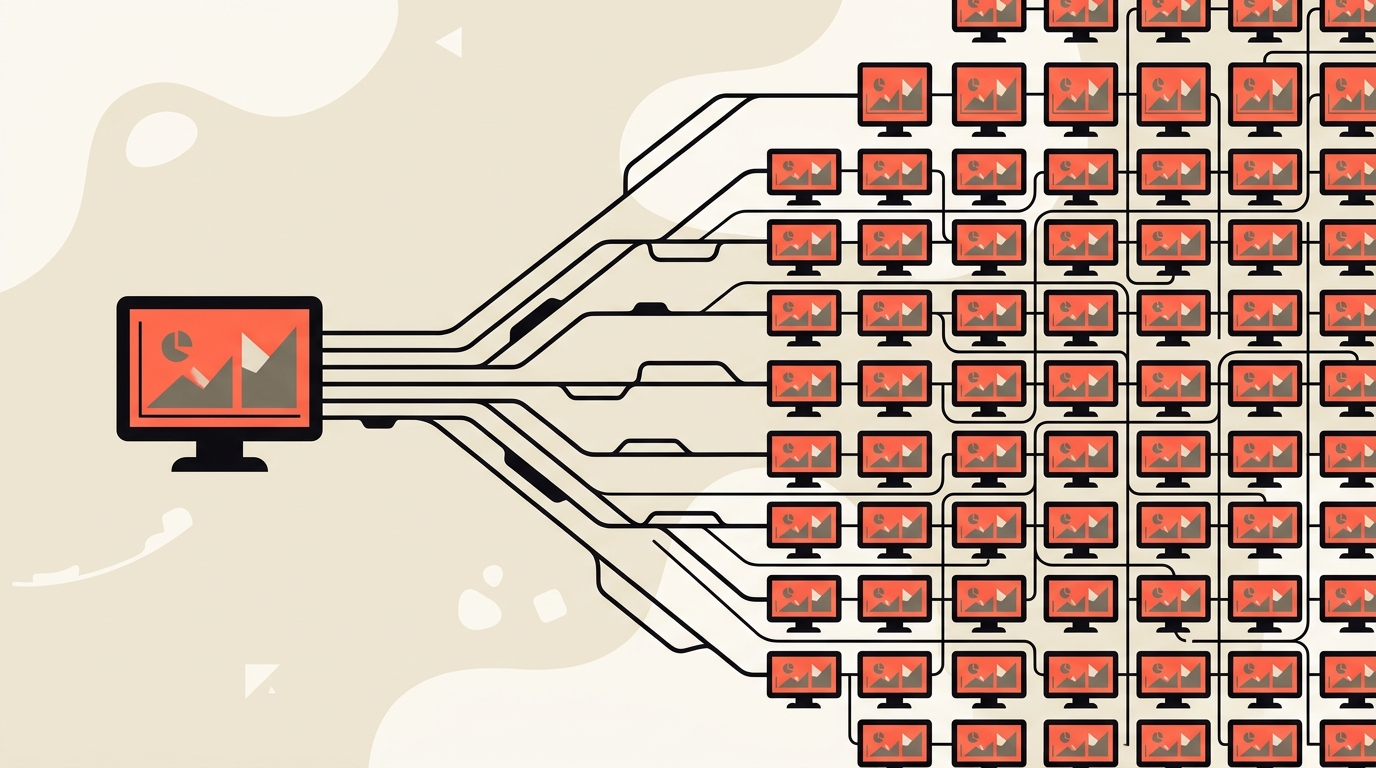
Every AI operations tool is sold on the same promise. Fewer dashboards, fewer alerts, fewer people needed to keep the lights on. Gartner’s 2026 Hype Cycle for AI in IT Operations, published on 10 July, says that promise does arrive, but not in the order the sales deck suggests, and there is a messy stretch in between that nobody budgets for.
Gartner’s own words are that many of these narratives promise tool consolidation, and it predicts the opposite outcome in the near term. For at least a couple of years, expect more layers, more control points, and more specialist observability, orchestration and management tools, each with its own console. The relief only comes later, once vendors themselves consolidate.
The number to hold on to is the outage one. Gartner expects that by 2028, 40% of infrastructure and operations organisations running agentic AI at scale in production will suffer a business-critical service disruption, up from less than 1% in 2026. That is not a reason to avoid the tools. Gartner also expects 60% of enterprises to deploy agentic AI in IT operations by 2029, up from fewer than 10% today, and by 2030 expects a quarter of current infrastructure and operations work to be done by AI alone, with bosses having restructured half of all such teams. Note too that by 2029 only 20% of AI-suggested actions will wait for human approval, down from 80% in 2025, as rule-based guardrails take over the checking.
What this means for you: count your consoles before you buy another one. If a vendor’s business case rests on retiring a tool you already pay for, write the retirement date into the contract. And if you are handing an agent the ability to act on your systems, decide now what it is never allowed to touch, because the approval step is on its way out.
Figures from Gartner, reported by The Register
5. Xi wants emergency response systems for AI
China’s president Xi Jinping has given a major speech on AI, delivered at the World AI Conference in Shanghai on 17 July. He called for laws and regulations, technological monitoring, and early warning and emergency response systems, in his words to strengthen the line of security, prevent abuses and malicious use, and ensure that AI is always under human control. He also said countries should strengthen risk-awareness and ensure AI is secure and controllable.
The other half of the speech was about openness. Xi argued AI development should adhere to the principle of openness and that countries should encourage open source, openness, collaboration and sharing. He also opposed what he called overstretching the national security concept in AI, and placing one country’s security over that of others. The Register reads that as aimed squarely at US restrictions on access to Anthropic’s Mythos model. Alongside the speech, China launched the World Artificial Intelligence Cooperation Organization, with 29 members including Indonesia, Malaysia, Russia, Pakistan, Brazil and South Africa, several of them already in the BRICS bloc.
What this means for you: you are not going to be regulated by Beijing. But that argument about export controls is a fight over which models and chips are allowed to reach which countries, and that determines what your suppliers can legally sell you and where they can host it. A push toward mandatory kill switches and incident reporting tends to surface months later as new terms in your vendor contracts. Worth knowing which of your suppliers have exposure here.
Sources: The Register and Al Jazeera
The bottom line
Three of today’s five stories are about the gap between how good something looks in a deck and how it behaves once it is running. Netflix spent $587 million on cleaning up footage. Gartner expects four in ten large agentic deployments to take out something business-critical by 2028. And the research suggests the people using these tools will report feeling more confident throughout. Budget for the gap.
Want to explore AI for your business?
Book a free discovery call to discuss how AI can streamline your operations and unlock new opportunities.
calendar_today Book a discovery callEnjoyed this? Get The Boardroom AI Brief.
Every Tuesday, the 10 AI developments that actually matter for SMEs. One short email. Free.
Free · no spam · unsubscribe any time

// WRITTEN BY
James Anderson
AI and full-stack engineer helping SME owners understand and implement AI. Founder of AI in Business and host of the AI in Business channel on YouTube.
Learn more about James →[ MORE ] RELATED READING
You might also like.

// NEXT MOVE
Get the AI news that matters, every week.
Join The Boardroom AI Brief. One free email every Tuesday: the AI developments that matter for your business, rated for relevance and explained in plain English.