Weekly AI News Roundup: DeepSeek's Big Move and the Truth About AI Agents
DeepSeek V4 challenges OpenAI and Anthropic on price. Plus the AI SwarmTax that could be costing your business money.
// WATCH THE EPISODE
AI in Business on YouTube
Prefer video? Watch this week's full breakdown on the AI in Business YouTube channel.
Introduction
One employee installing an AI tool gave hackers a walk-in path to production systems behind millions of websites. I’ll break down exactly how that happened and what you need to check in your own business later in this video.
But first, DeepSeek just released an open-source model that matches GPT 5.5 at a fraction of the cost. And Stanford researchers found that most businesses are massively overpaying for AI agents.
This is your weekly AI news roundup. Let me break it all down.
DeepSeek V4: The Price Is Right
Massive news this week. DeepSeek just released their V4 model and there are three reasons why business owners should pay attention.
The Cost Factor
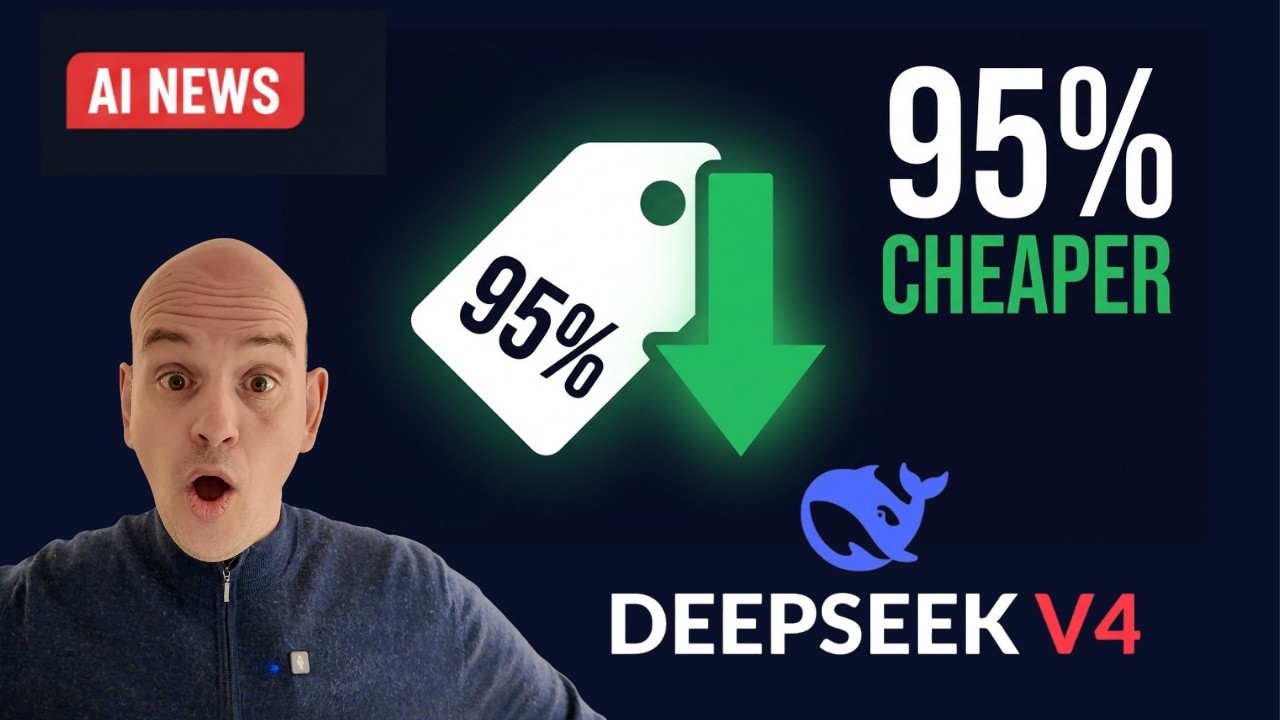
DeepSeek V4 Pro charges about $1.74 per million input tokens. V4 Flash is even cheaper at around 14 cents. That is a fraction of what OpenAI and Anthropic charge for comparable models.
If you are building AI into your business, these price points fundamentally change your ROI calculations. We love competition. We like prices coming down. We like getting value for our money.
But remember, with any of these frontier models, security and control of your data is absolutely paramount.
Performance That Matters
According to the benchmarks, V4 Pro actually matches Anthropic Claude’s Opus 4.6, which is widely known as the strongest model out there at the moment. It is also better than OpenAI’s GPT 5.4 and Google’s Gemini 3.1.
That puts it alongside the best models in the world at just a fraction of the price. And because it is open source, you can download it, modify it, and run it on your own servers.
That matters enormously for businesses concerned about data privacy. You are going to need quite chunky hardware to run it. But it is possible. This is what we believe is the future of AI. Locally-hosted models where you have full control over your data.
Efficiency Gains
V4 can handle 1 million tokens of context. That is enough to fit your entire codebase and years of customer data in a single session. But you might not want to do that.
It only uses around 27% of the compute and power of the previous version. For Flash, it is even better, just 10% of the compute.

The Bigger Picture
Open source models are where we feel most comfortable on this channel. Frontier models are amazing. I use them for lots of aspects of my business. But open source models are really the passion of this channel and where we feel like the future of AI is.
Being able to run these things offline gives you this powerful resource to help run your business.
The only caveat is that DeepSeek is a Chinese company and you need to factor in geopolitical considerations. But the technical capability and the price point make it genuinely impressive and genuinely interesting as an alternative to Claude and GPT because they are expensive. In smaller businesses, every penny counts.
The AI SwarmTax: Are You Overpaying?
This story could save you money. Stanford University researchers coined a new term called the AI SwarmTax. It refers to the unnecessary computational premium that businesses pay for multi-agent AI systems where single-agent systems often deliver equal or better performance.
Here is the finding. On complex reasoning tasks, single-agent systems match or outperform multi-agent setups when both use the same thinking token budget. The multi-agent gains often come from using more resources, not smarter architecture.
Why does this matter? Because multi-agent systems come with added baggage. Longer reasoning traces, more API calls, higher latency, and of course higher costs.
A single-agent wins on total cost of ownership. Fewer calls, lower latency, and easier debugging.
The way I build, which I have talked about on this channel, is micro-layer building and coding. I lay a little slice on the sandwich, check it, debug it, test it, and then pull it into my main on GitHub. I do this in really micro stages because I like to audit and check everything.
When you start bringing in agents and swarms of agents, yes, it is amazing because you can do huge amounts of tasks. But you do lose a bit of quality control and it is going to cost you more money.

For your business, the advice is pretty clear. If you build AI for tasks like data analysis, customer queries, or operational automation, do not default to swarms just because they sound impressive and you can tell all your mates you are doing swarms of AI agents.
Test single agents first. This is what I recommend. You will save a lot of money compared to your existing bills and you have a lot more control and a lot more debugging capability. If a single agent matches performance at lower costs, then that is your winner.
Claude’s AI Shrinkflation Explained
This story is important if you use Claude or rely on any AI tools for business tasks.
For several weeks, and I am pretty sure everybody noticed this including myself, Claude has been absolutely terrible. Users including myself have been reporting that Claude was getting worse and less capable on sustained reasoning, more prone to hallucinations, and wasteful with tokens.
People called it AI shrinkflation. So Anthropic actually published a post-mortem explaining exactly what happened. The model weights themselves were unchanged. The problem was in what they called harnesses. The software infrastructure around the models.
A bug that was meant to clear old thinking from idle sessions ended up running every turn, causing Claude to forget prior reasoning. A session cache bug actually made things even worse. And a system prompt change meant to reduce boasts actually degraded code quality when combined with other issues.
I noticed this and started switching more and more to GPT 5.4 because I was getting seriously frustrated with it. It was like talking to my two-year-old son. I think he was probably better at coding during this period.
Anthropic probably lost a lot of business from it. I saw on Reddit that a lot of people jumped ship. But they did recover it. They gave me credit for 75 bucks as a nice gesture. And the release of Opus 4.7, which is really good, they kind of regained the throne in my eyes.
I still use both of them. I still use 5.4 which is good. I am still playing about with 5.5. But 4.7 is great.

A key insight for your business is that AI tools can change even when the core model does not. The infrastructure around it can definitely affect performance, which is what happened here.
Always check your output regularly. When you use these tools, you actually start to feel the responses and the quality. It is more of a sense. You start to do small things and think, what? Why am I asking you three times to fix this?
Keep alternatives ready. I am split between the two. I really like GPT 5.4. I know lots of people say 5.2 and 5.3 were better, but 5.4 works for me.
The 85-5 Trust Gap
This week Cisco surveyed their major enterprise customers and found that 85% are running AI agent pilot programs, but only 5% have actually deployed those agents into full production. That is an 80-point gap between running a test and actually shipping it.
Cisco’s president called trust the biggest impediment to scaled adoption. He made an important distinction. There is a difference between delegating and trusted delegation. Delegating too much to AI too quickly could lead to bankruptcy or worse. Trusted delegation, where you have the right guardrails in place, could lead to market dominance.
Enterprises with massive budgets and security teams are struggling to trust AI agents. But that tells you something about where we actually are with this technology. It is not ready to run your entire business autonomously. But it is ready to handle specific bounded tasks if set up properly.
The opportunity is for the little guys like us. We can fight with the big boys because we can implement these things faster. We can move quickly and maximise our potential in process sales, marketing, delivery, and project delivery. We can close that gap between the big boys with big budgets and the little boys who can move quick but want to move safely.
Start with AI agents on low-risk tasks like email triage or scheduling summaries before scaling up. Always audit outputs and keep humans in the loop for decisions that matter.
Quick Hits
OpenAI released GPT 5.5, calling it their smartest model yet. I am still testing it. I am still on GPT 5.4 at the moment, finishing off a few tasks, then I will swap over to really see how it rolls.
The improvements include multi-step reasoning, agentic capabilities, and token efficiencies, which means hopefully lower costs. It scored 82.7% on the terminal bench, beating Anthropic’s Claude.
I am not 100% sure on these benchmarks. I like to just play about with them and I give them what I like to call the Jimmy Anderson benchmark, which is how much I like them. At the minute, Anthropic Opus 4.7 is probably leading on the Jimmy Anderson benchmark test, which is absolutely theoretical and made up by me.
Security Warning: Check Your AI Tools
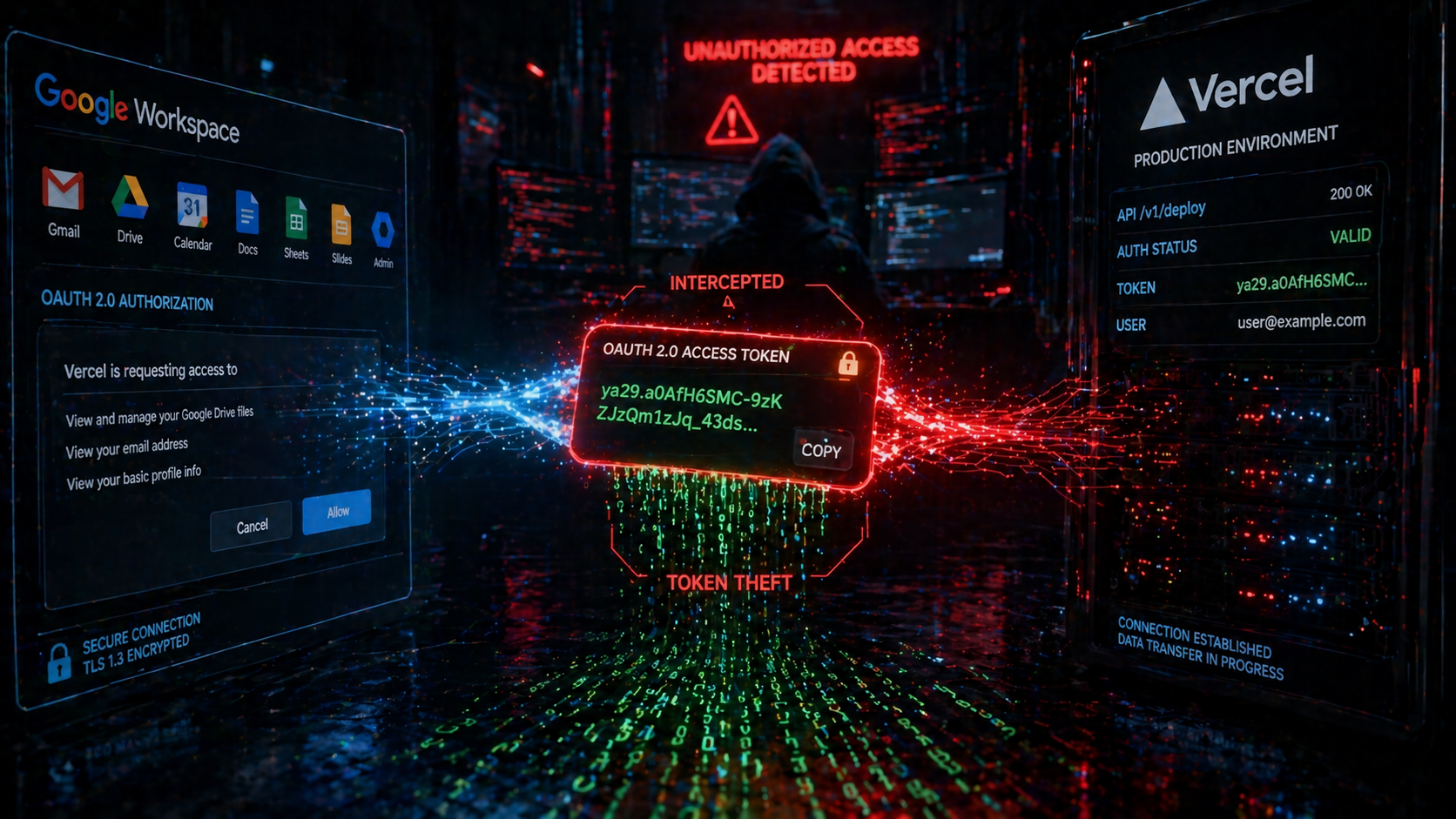
One employee installing an AI tool gave hackers a walk-in path to production systems behind millions of websites.
This is a reminder that every tool you add to your business is a potential security risk. Check what permissions you are granting. Audit who has access. Make sure you are not giving hackers an easy way in.
I will do a deeper video on this next week with specific steps you can take to secure your AI setup.
Key Takeaways
- DeepSeek V4 offers comparable performance to Claude and GPT at a fraction of the cost, with the added benefit of being runnable on your own hardware
- Single-agent AI systems often outperform multi-agent swarms at lower cost, so test single agents before scaling to more complex setups
- AI tool performance can change even when the core model stays the same, so always monitor output quality and keep alternatives ready
- The 85-5 gap shows that even enterprises struggle with AI trust, so start small with low-risk tasks and scale up gradually
- Security matters. Every AI tool you install is a potential entry point for attackers
Over to You
That is your weekly AI news roundup. If you found this useful, please hit the subscribe button because I break this down every single week and I do not want you to miss anything important.
I am curious about your AI budget. Are you paying for AI tools? How much are you spending per month? Drop it in the comments below because I am really interested in getting a sense of what people are actually paying.
If you want to know where AI fits in your business, I offer AI audits where I review your operations and deliver a clear roadmap for automation and AI integration. No jargon, no pressure, just honest recommendations. Book a call through the link in the description.
I will see you in the next one.
Enjoyed this? Get The Boardroom AI Brief.
Every Tuesday, the 10 AI developments that actually matter for SMEs. One short email. Free.
Free · no spam · unsubscribe any time

// WRITTEN BY
James Anderson
AI and full-stack engineer helping SME owners understand and implement AI. Founder of AI in Business and host of the AI in Business channel on YouTube.
Learn more about James →[ MORE ] RELATED READING
You might also like.

// NEXT MOVE
Get the AI news that matters, every week.
Join The Boardroom AI Brief. One free email every Tuesday: the AI developments that matter for your business, rated for relevance and explained in plain English.