
Weekly AI News Roundup: What Actually Matters for Your Business
Anthropic leaked their own code, Intuit's AI hit 85% repeat usage, and robotaxis trapped passengers. Here is what matters for your business.
// WATCH THE EPISODE
AI in Business on YouTube
Prefer video? Watch this week's full breakdown on the AI in Business YouTube channel.

Introduction
Anthropic just accidentally published the entire source code for Claude Code. One GitHub repo hit fifty thousand stars in hours. Then they tried to fix it and accidentally took down eight thousand legitimate repositories. Plus, one company shipped AI to three million customers and eighty-five percent of them came back. And robotaxis in China just trapped passengers on a highway for two hours.
Let me break down what matters for your business.
Welcome to AI in Business. I am James Anderson, and this is your weekly AI news roundup. Every week I condense the biggest AI stories into what actually matters for your business. No jargon, no hype, just what you need to know.
Anthropic Leaked Their Own Source Code
First up, and this is a big one. Anthropic accidentally leaked the full source code for Claude Code, their command line AI coding agent. Here is what happened.
On March 31st, someone at Anthropic published an npm package, that is a software update, and accidentally included a source map file that pointed to a publicly accessible zip file on their servers. That zip contained nineteen hundred files of TypeScript source code. Everything. The full architecture, the agent loop, multi-agent orchestration, permission systems, cost optimisation, safety prompts, forty-four unreleased feature flags, hidden model codenames, and employee-only quality checks.
A security researcher spotted it within hours and shared the download link. One GitHub repository hit fifty thousand stars and forty-one thousand five hundred forks in a matter of hours. That is the fastest ever on GitHub.
Then it got worse. Anthropic filed a DMCA takedown notice to remove the code, but they accidentally targeted eight thousand one hundred GitHub repositories, including legitimate forks of their own public Claude Code repo. Users reported being locked out of their own unrelated code. Anthropic called it human error in their release packaging and retracted most of the notices.
Here is what I want you to take away from this. No customer data was exposed. Claude still works fine. But this is a reminder that the AI tools you rely on are built by humans and humans make mistakes.
For your business, if you are using any third-party AI tool, ask your vendor what happens when things go wrong. What is their incident response? How do they handle security? If they cannot give you a clear answer, that should concern you.
And if you are a developer, the leaked code is now permanently in the wild. People have already written clean-room rewrites to avoid copyright issues. That means the blueprint for how a production-grade AI agent works is now public knowledge.
Intuit Proves AI Works When Humans Stay in Control
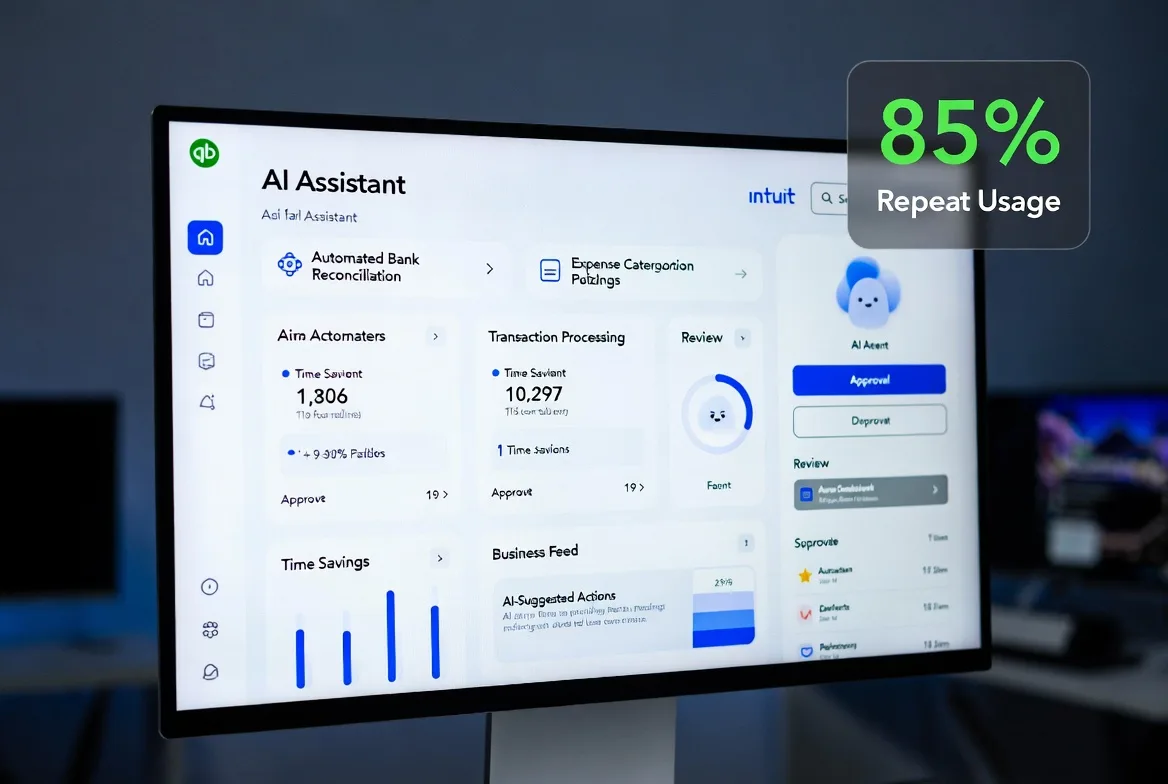
Now this one is exactly the kind of AI story I love to see. Intuit, the company behind QuickBooks and TurboTax, shipped AI agents to three million customers. And eighty-five percent of them came back. Let me say that again. Eighty-five percent repeat usage. That is massive for any software product, let alone something as new as AI agents.
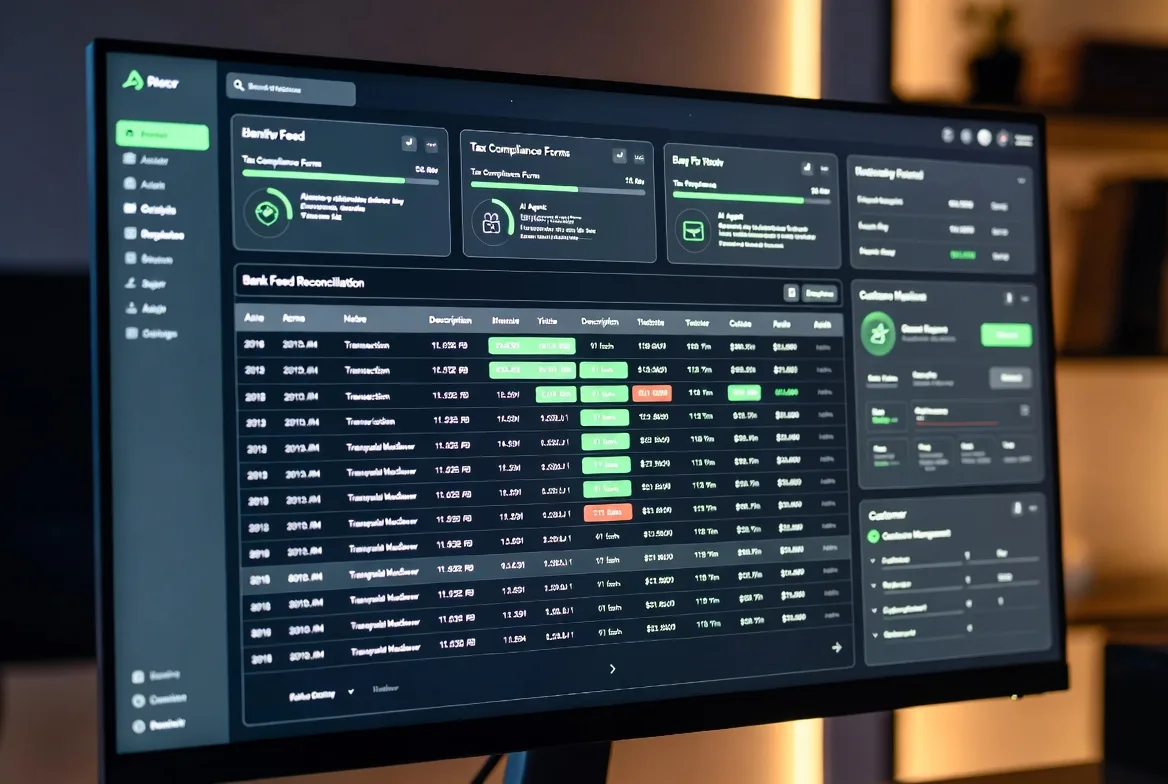
Here is the key insight from their EVP Marianna Tessel. The secret was keeping humans involved, not less. All AI agent actions appear in what they call a business feed where users can review, approve, or flag issues before anything takes effect. The AI does the work but you stay in control.
The agents handle bank feed reconciliation, VAT compliance, transaction categorisation, customer management. All that repetitive accounting work that eats up your time.
The results speak for themselves. Up to twelve hours saved per business every single month. Seventy-eight percent of customers say it makes it easier to take effective action. And eighty percent of UK SMB leaders believe AI could help them delegate more effectively while maintaining oversight.
Here is why this matters for your business. Most business owners are hesitant about AI because they fear costly mistakes or losing control. Intuit addressed that directly. You get the time savings without the anxiety. This is not set it and forget it. It is delegate with confidence.
The eighty-five percent repeat rate proves that when AI stays in its lane and humans stay in theirs, the model works. That is the approach we advocate on this channel.
Robotaxi Failures: A Wake-Up Call
Now this one is a wake-up call. Baidu’s Apollo Go robotaxi service in Wuhan, China suffered a widespread system failure on April 1st. At least one hundred vehicles suddenly stopped, including in dangerous spots like the fast lane of highways. Passengers were trapped inside for up to two hours. Some doors could be opened but heavy traffic prevented safe exits. Police had to assist. Following vehicles collided with the stalled robotaxis. One passenger reported a thirty-minute wait just to reach customer support.
Local police called it a system failure affecting operations city-wide. Baidu has not disclosed the cause.
This is not isolated. Last week I covered Waymo robotaxis needing firefighters to move them during emergencies. A widespread power outage in California wiped out traffic lights, causing Waymo vehicles to become stuck. And now this.
The lesson remains the same. There is a meaningful difference between AI that works in normal conditions and AI that works in all conditions. For your business, if you are using any autonomous system, do not assume it works perfectly. It works well most of the time. That is different from all of the time. Keep humans in the loop for anything critical.
The Trust Problem: Employees Using AI Behind Your Back
This next story ties directly into that trust issue. Your employees are almost certainly using AI at work right now. ChatGPT, Claude, whatever else. They are using it without your approval or oversight. This is called shadow AI and it is becoming a real governance problem.
A startup called Kilo just launched KiloClaw for Organizations. Instead of employees using their own personal AI accounts with their own credentials, this lets companies give employees AI agents while keeping IT in control. You get visibility into which tools your team uses and what tasks they handle. Agents run in controlled environments. When someone leaves, their access disappears automatically. One invoice, full visibility into costs. Over twenty-five thousand people are already using it.

Here is the thing. If you have ten or more employees, you probably have this problem right now. Employees pasting sensitive business data into public AI tools. No audit trail. No visibility. For businesses with twenty or more employees and sensitive data, solutions like this are worth keeping an eye on. For smaller teams, it is probably overkill for now, but the problem is only going to grow.
Quick Hits
Q1 startup funding hit two hundred and ninety-seven billion dollars, shattering all records. That is two and a half times the previous quarter. But here is the reality. Sixty-three percent of that came from just four mega-deals. OpenAI raised one hundred and twenty-two billion. Anthropic raised thirty billion. xAI raised twenty billion. Waymo raised sixteen billion. Strip those out and the market looks more normal. The headline number is impressive but the concentration of capital in a few massive players is the real story. For your business, this means the tools you use are being built with unprecedented investment behind them, but also with enormous pressure to deliver.
Meta is building a massive new AI data centre in Louisiana called Hyperion. It will draw as much electricity as the entire state of South Dakota. They are funding ten natural gas power plants to support it. Those plants will emit twelve point four million metric tons of CO2 every year. That is fifty percent more than Meta’s total carbon footprint in twenty twenty-four. If you care about the environmental impact of your AI usage, worth thinking about where your data is going and who is powering it.
Salesforce just announced thirty new AI features for Slack. Slackbot can now draft emails, schedule meetings, sift through your inbox, create reusable AI skills for recurring tasks, and operate outside of Slack to monitor your desktop. It can connect to twenty-six hundred apps. If you are already paying for Slack, this is essentially free to add. Not a bad starter place if you want to experiment with AI at work. Just be aware it can now monitor your desktop activities, so check the privacy settings.
Hollywood is still on the AI hype train. Wired reported on the Runway AI Summit, held just a week after Sora’s death, where AI was compared to fire and the printing press. Star Wars producer Kathleen Kennedy was one of the few skeptics in the room. The honest take is that AI for creative content is still firmly in the hype phase. Useful for rough drafts and mockups, but not ready for production work. If you use AI for business content, test it for simple tasks and always human-review the output.
One to watch this week. While Baidu’s robotaxis were trapping passengers in Wuhan, Uber and WeRide launched fully driverless robotaxis in Dubai. Up to one hundred Level 4 autonomous vehicles integrated into the Uber app. No human safety operator in the car. Dubai’s RTA wants twenty-five percent of all mobility trips autonomous by 2030.
Why Dubai is interesting is the controlled environment. Fewer pedestrians, more predictable traffic, clear regulations. It is a very different testing ground to Wuhan or San Francisco. For businesses in logistics or transport, this signals that driverless technology is maturing, but the gap between controlled conditions and real-world chaos, as Baidu just proved, is still significant. Worth watching, not worth investing in yet.
Key Takeaways
-
Security matters. Even the companies building AI make mistakes. Ask your vendors about their incident response and security practices before relying on their tools.
-
Human-in-the-loop works. Intuit’s eighty-five percent repeat rate proves that when AI stays in its lane and humans stay in theirs, the model works for business.
-
Autonomous systems have limits. Robotaxis work well most of the time, but “most of the time” is not good enough for critical business applications. Keep humans involved.
-
Shadow AI is real. Your employees are likely using AI tools without your knowledge. If you have sensitive data, you need a governance strategy.
-
The big players are getting bigger. Most AI investment is flowing to a handful of massive companies. This means the tools you use have huge resources behind them, but also enormous pressure to deliver results.
Over to You
So the distilled takeaway this week. Even the companies building AI make mistakes. Anthropic leaked their own source code. Baidu’s robotaxis failed on a highway. But Intuit proved that when you keep humans in the loop, eighty-five percent of users keep coming back. The pattern is the same every week. AI works when humans stay in control. That is the formula for your business.
If that was useful, subscribe because I break this down every week. I am also building an A to Z academy series that goes deeper into the specific AI topics that matter for business owners. Check the playlist for the latest lessons. No hype, no jargon, just what you need to know. See you next week.


Enjoyed this? Get The Boardroom AI Brief.
Every Tuesday, the 10 AI developments that actually matter for SMEs. One short email. Free.
Free · no spam · unsubscribe any time

// WRITTEN BY
James Anderson
AI and full-stack engineer helping SME owners understand and implement AI. Founder of AI in Business and host of the AI in Business channel on YouTube.
Learn more about James →[ MORE ] RELATED READING
You might also like.


// NEXT MOVE
Get the AI news that matters, every week.
Join The Boardroom AI Brief. One free email every Tuesday: the AI developments that matter for your business, rated for relevance and explained in plain English.