AI for Small Business: What Actually Works in 2026
AI for small business in 2026: what UK SMEs actually use AI for, how to start without a tech team, what it costs, and how to stay safe. A plain-English guide for owners.

// WATCH THE EPISODE
AI in Business on YouTube
Prefer video? Watch this week's full breakdown on the AI in Business YouTube channel.

If you run a small business, you have probably heard that AI will either save you or sink you. The truth is calmer than both. This guide covers what AI for small business actually means in 2026, what it is good at, how to start without hiring a tech team, what it costs, and how to stay safe.
In a nutshell: Despite the noise, most UK small firms have not yet put AI to work, and the ones that have are mostly dabbling rather than embedding it. That is the opportunity. The winners are not the firms with the biggest budgets. They pick two or three real jobs, hand each to a tool that fits, and check whether it actually saved time or money. Start small, keep your data sensible, and treat the first few months as an experiment.
1. AI for small business in 2026: where UK firms really stand
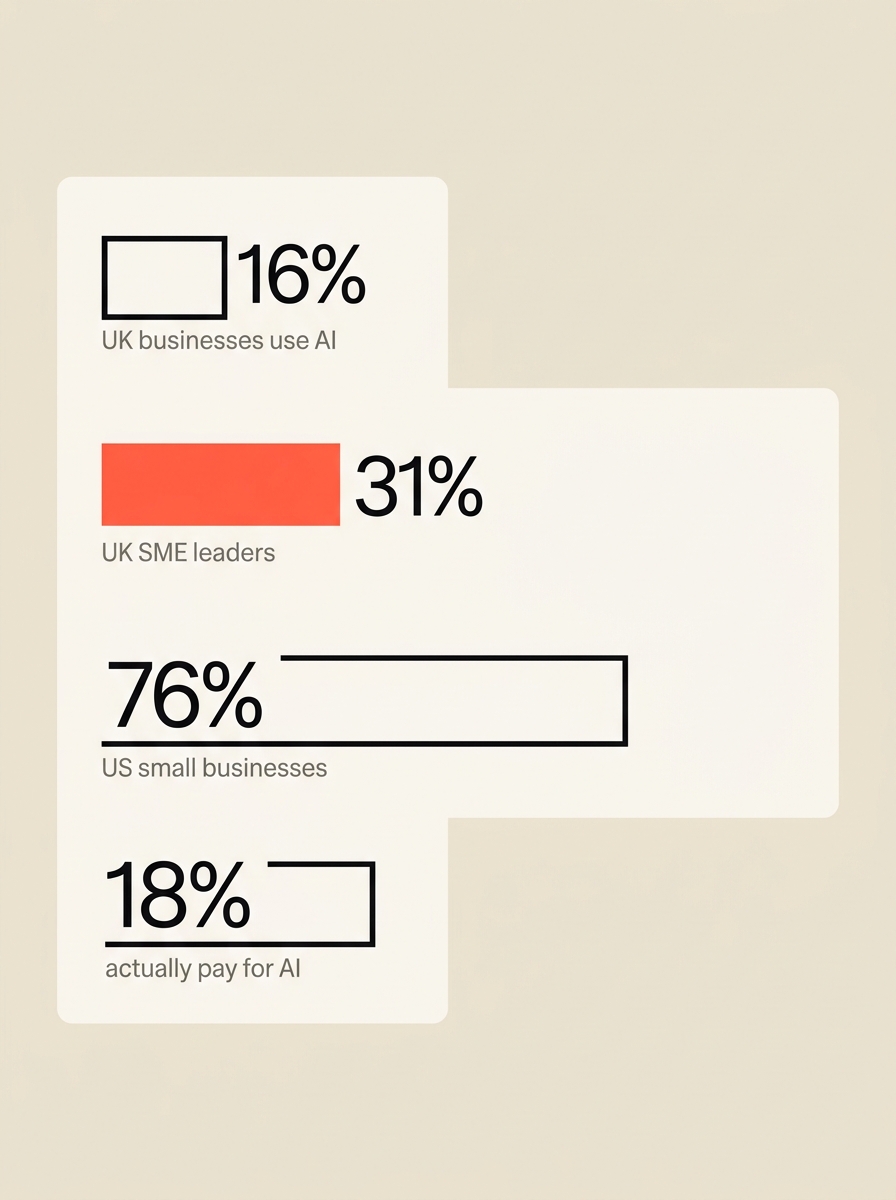 You would think every business is already running on AI. In the UK, that is not true yet. The government’s official adoption research, run by DSIT across 3,500 firms, found just 16% of UK businesses currently use AI, with another 5% planning to. A more recent YouGov poll of SME leaders put usage higher, at 31% using AI tools with a further 15% planning to. The honest read is somewhere in between. Plenty of owners are talking about AI. Far fewer are using it properly.
The picture looks busier in the United States, where surveys report much higher numbers. But even there, the gap between using AI and using it well is huge. A Goldman Sachs survey of small business owners in early 2026 found 76% use AI but only 14% have fully integrated it into how they work. There is a useful reality check in the payment data too. The JPMorgan Chase Institute, looking at actual spending rather than surveys, found only about 18% of small businesses had paid for an AI service by the end of 2025. Most “AI users” are on free tools.
That is the real opportunity. The bar for doing AI properly is low right now, so a modest amount of deliberate effort puts you ahead of most of your market. You do not need to be early. You need to be slightly more organised than the firm down the road.
2. What AI is actually good at for an SME
 Ignore the hype about AI running your whole company. Think of it as a fast, tireless assistant that is brilliant at first drafts and poor at final decisions. The jobs it handles well share a pattern. They involve words, repetition, or sorting, and a human can check the result in seconds.
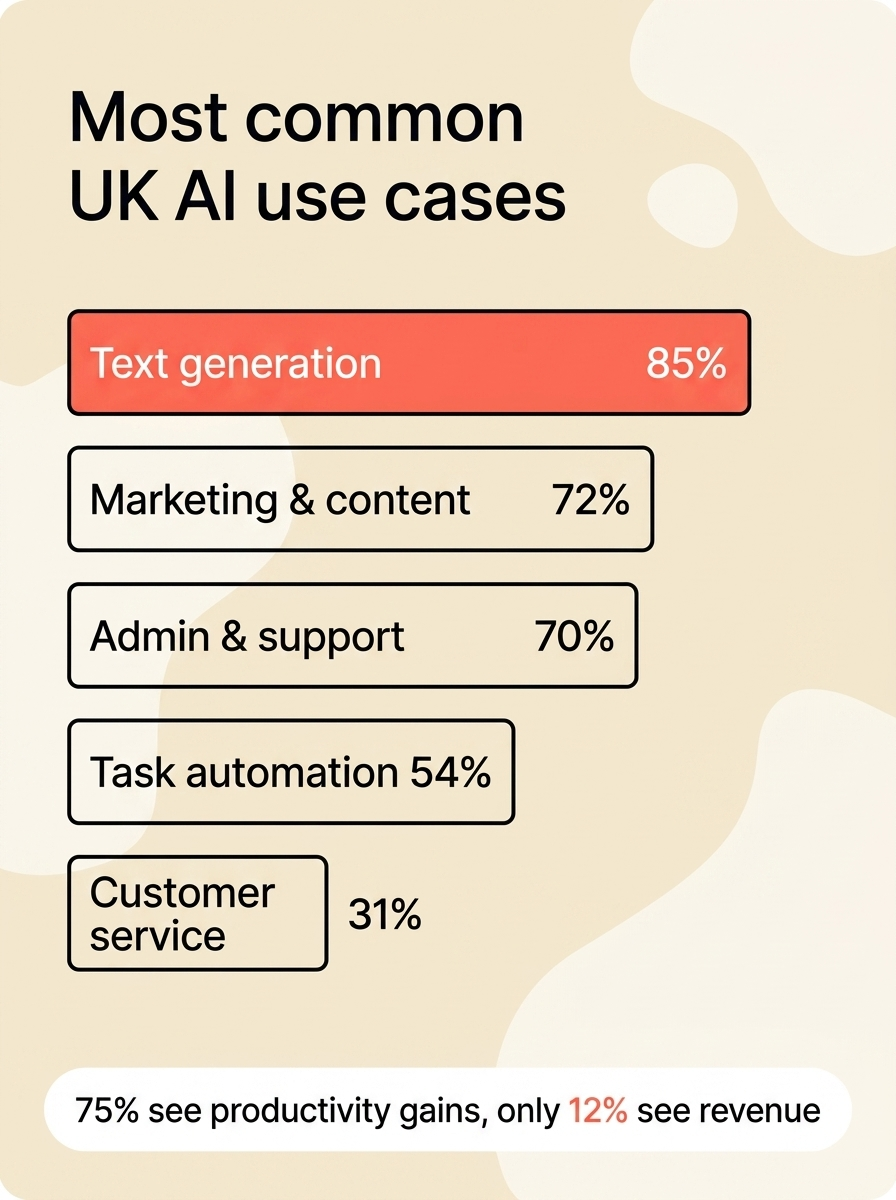
The DSIT research shows where UK firms actually point it. Text generation tops the list at 85% of adopters, followed by marketing and content at 72% and admin and support at 70%. The YouGov poll adds task automation at 54% and customer service at 31%. None of that is exotic. It is the everyday writing, sorting, and replying that fills your week.
Here is the catch worth knowing before you start. UK firms using AI report real productivity gains, with 75% saying it improved workforce productivity, but only 12% reporting higher revenue so far. AI is saving people time. Turning that time into money is the part you have to design for. Where AI struggles is anything needing real judgement, current facts it was never given, or accountability. Use it to draft your newsletter or reply to a routine enquiry, and keep a human on anything that touches money, law, or your reputation.
3. How to use AI in your business without a tech team
 You do not need to code, and you do not need to hire anyone. Start with a paid version of one general assistant such as ChatGPT, Claude, or Gemini. The free tiers are fine for trying things, but the paid versions are smarter and worth the small monthly cost once you rely on them.
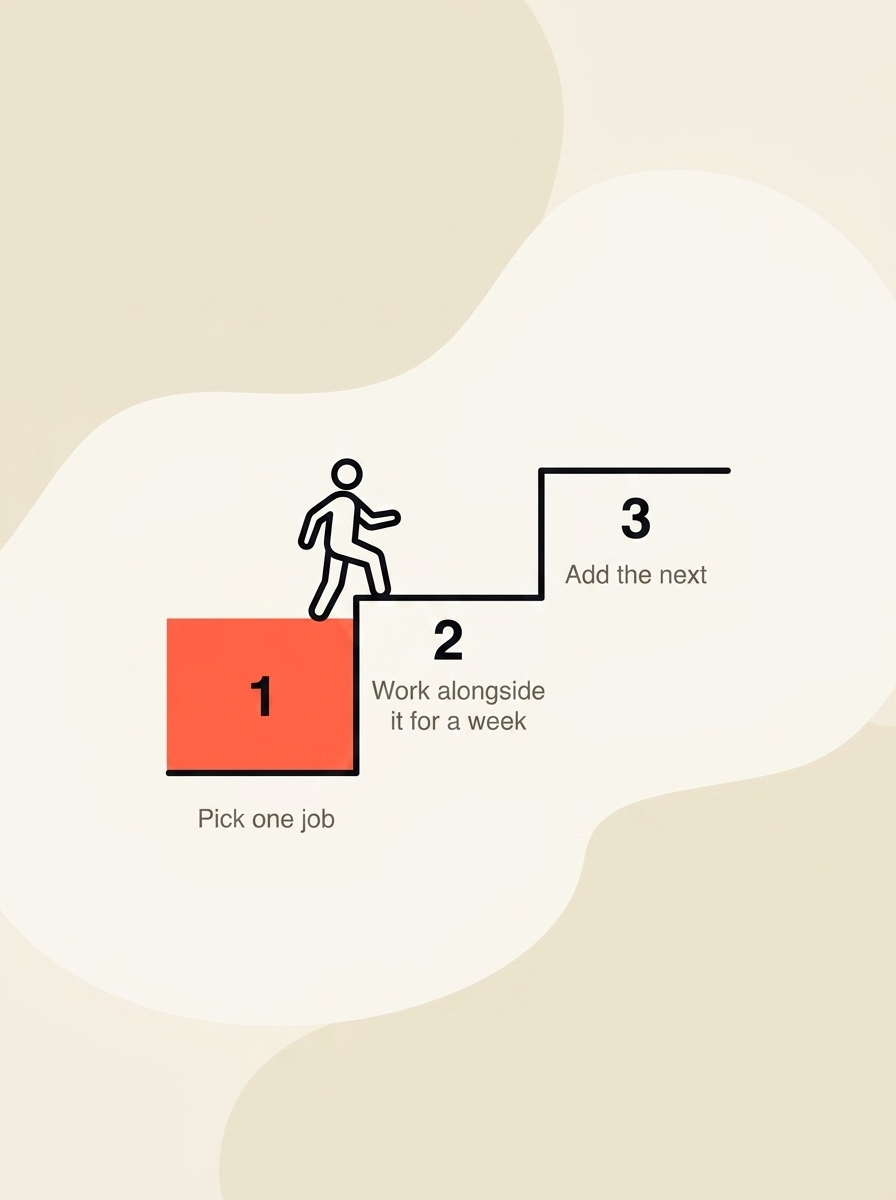
Pick one job that eats your week. Drafting quotes, answering the same customer questions, writing social posts, tidying a spreadsheet. Spend a week doing that job with the AI beside you. Give it your real examples, tell it your tone, and correct it when it gets things wrong. The quality of what you get back depends almost entirely on the quality of what you put in. A vague request gets a vague answer.
When one job works, add the next. Resist the urge to roll out ten tools at once. Goldman Sachs found 73% of small firms say they need more training and support, and the UK’s SME Digital Adoption Taskforce warned that many firms overrate their readiness and lag G7 rivals on uptake. Going one step at a time is how you avoid both traps. If marketing is your starting point, our step-by-step guide to starting with AI in marketing walks through it.
4. What it costs and how to tell it is working
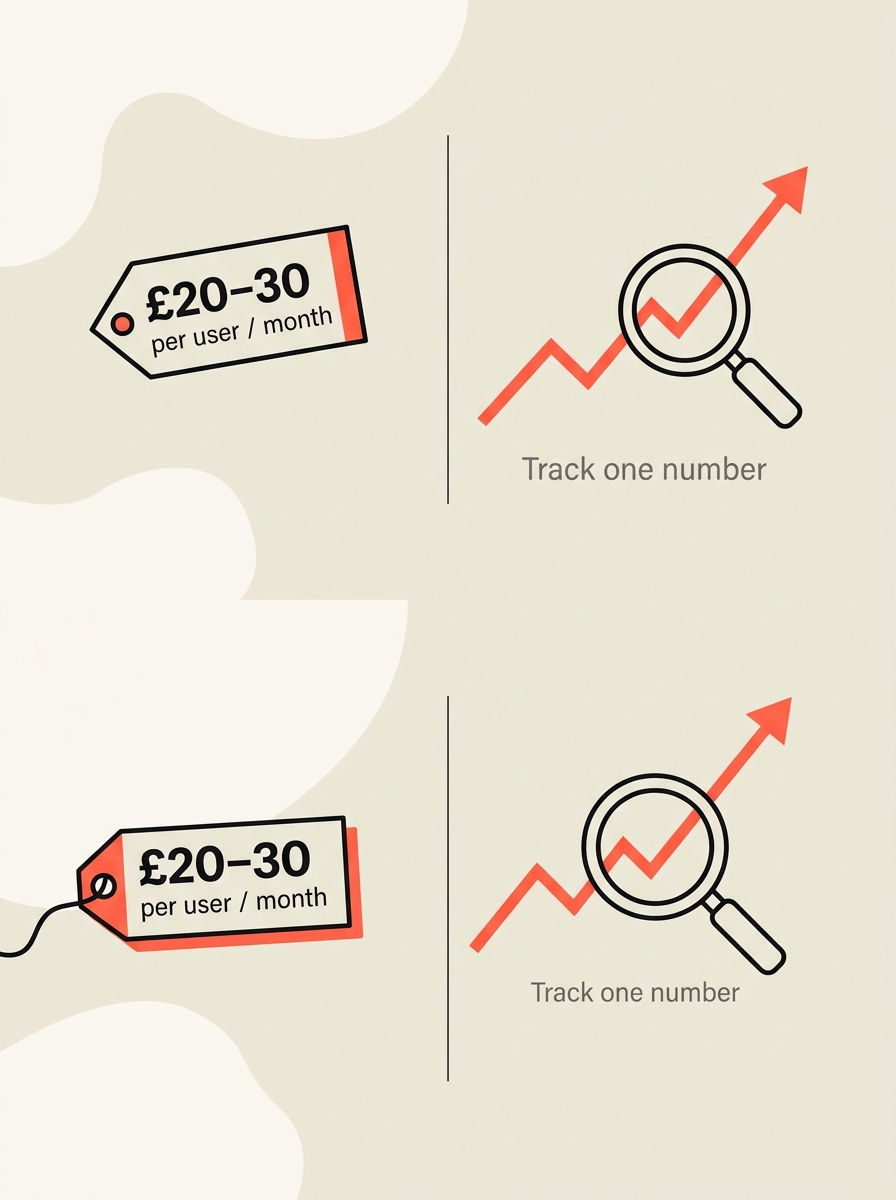 The cost of entry is genuinely small. A capable assistant runs around twenty to thirty pounds per user per month. Specialist tools for writing, design, or automation add up, but you should not need many. The bigger cost is your time learning, and the bigger risk is paying for tools nobody uses. Cost and uncertain returns are exactly what UK owners cite as top barriers, so this matters.
So measure something simple from day one. Pick the job you handed over and track one number. Hours spent on it per week, replies sent per day, quotes turned around. Remember that productivity gain rarely shows up as revenue on its own, so decide in advance what you will do with the time AI frees up. If the number does not move after a month, change the tool or change how you use it. For a real-world view of which tools earn their keep, see my actual AI tool stack and what I pay for.
One warning on value. The thing that wrecks returns is bad inputs. Feed AI a messy customer list or out-of-date prices and it will confidently produce rubbish at speed. We have written before about why data, not the model, is the real reason AI projects fail. Sort your inputs before you scale anything up.
5. The risks, and how to stay on the right side of them
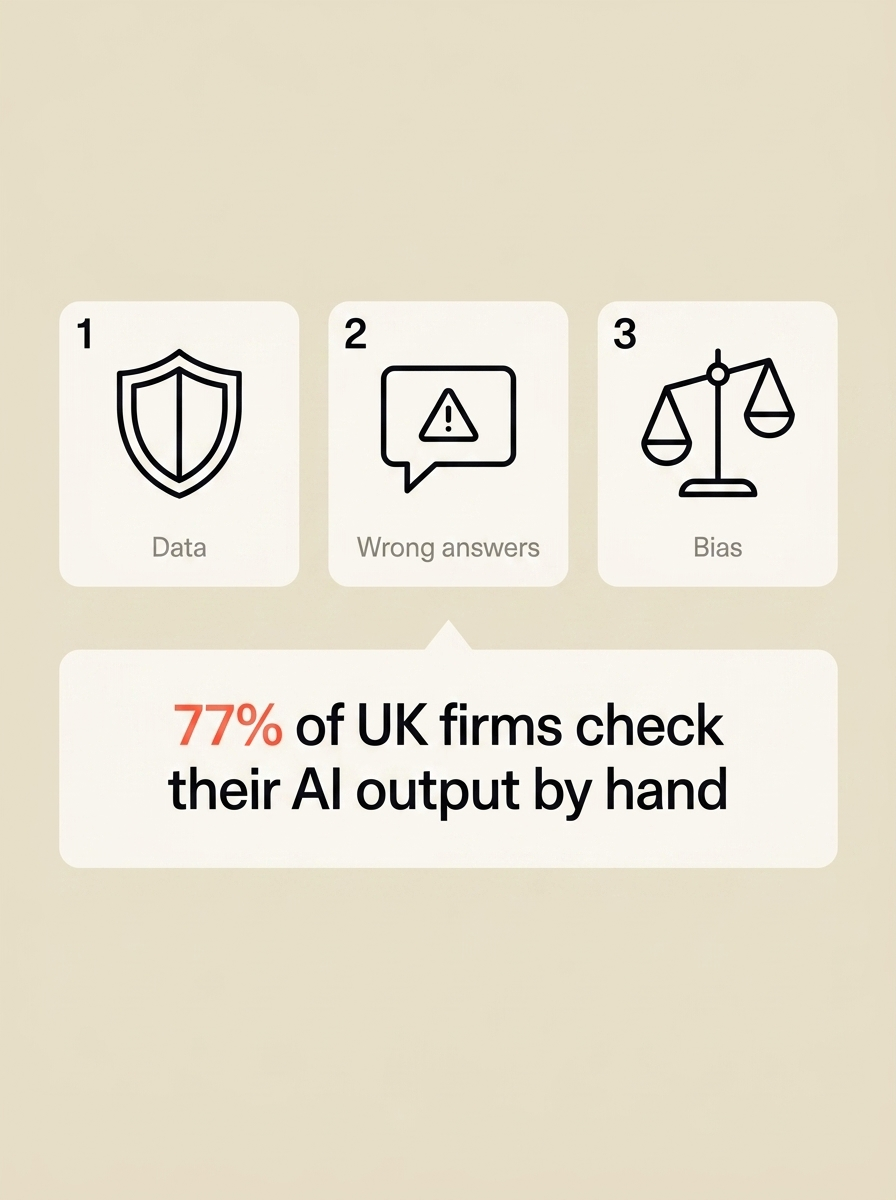 Three risks matter for a small business, and all three are manageable. The first is data. Half of UK SMEs that are holding back name data privacy and security as their main concern. The fix is simple. Do not paste customer records, card details, or anything confidential into a free public tool, because you may be handing it over for training. Use the business or paid tiers, which usually let you switch that off, and check the setting. The ICO expects this kind of care under UK data protection law.
The second risk is wrong answers. AI makes things up, often fluently. UK firms know this, which is why 77% apply significant human checking to AI output and only 2% apply none. Follow their lead. A human signs off anything that goes to a customer, a regulator, or your accounts. The third risk is bias and reputation. A tool trained on the wider internet can carry assumptions you would never put in writing, which matters because nearly a fifth of UK SMEs already use AI in decision-making. Our explainer on AI bias and what business owners need to know covers this.
You do not need a legal department to handle any of this. A single page that says what staff can and cannot put into AI tools covers most of it. If you feel unsure, you are in the majority, and the fix is a short policy plus a bit of practice.
The bottom line
AI for small business in 2026 is not about being clever or early. Most UK firms have barely started, so picking a couple of real jobs, choosing one tool, and checking whether it actually helped will put you ahead within a month. Keep your data sensible, keep a human in the loop, and treat the early going as an experiment.
Want to explore AI for your business?
Book a free discovery call to discuss how AI can streamline your operations and unlock new opportunities.
calendar_today Book a discovery callEnjoyed this? Get The Boardroom AI Brief.
Every Tuesday, the 10 AI developments that actually matter for SMEs. One short email. Free.
Free · no spam · unsubscribe any time

// WRITTEN BY
James Anderson
AI and full-stack engineer helping SME owners understand and implement AI. Founder of AI in Business and host of the AI in Business channel on YouTube.
Learn more about James →[ MORE ] RELATED READING
You might also like.


// NEXT MOVE
Get the AI news that matters, every week.
Join The Boardroom AI Brief. One free email every Tuesday: the AI developments that matter for your business, rated for relevance and explained in plain English.