Do You Need Technical Skills to Use AI? (No, Here's Why)
Do you need coding for AI? No. What business owners actually need to use AI without technical skills, what the data shows, and when expert help pays.

“I’m not technical” is still the most common reason owners give for not touching AI. It sounds sensible. It is also out of date, and the numbers prove it.
In a nutshell: You do not need coding or technical skills to use AI in your business. Today’s AI tools take instructions in plain English, and the large majority of small firms using AI are using exactly these off-the-shelf tools. The skill that matters is knowing your business and giving clear instructions, which you already have. Technical help is only worth paying for at the bespoke end, and most firms never need to go there.
1. Where the “you need to be technical” idea comes from

The idea used to be true. Until a few years ago, putting AI to work meant hiring data scientists, building custom models and spending serious money. That version of AI was for corporates with IT departments.
Modern AI tools removed that barrier. ChatGPT, Claude and Gemini all work the same way: you type what you want in plain English, and the tool does it. There is nothing to install, nothing to configure and no code anywhere. If you can write an email, you can use them.
The barrier that remains is a belief, not a skill. Owners who assume AI is for programmers never get as far as trying it. That is the real gap, and it costs more than it appears to, because the tools themselves cost little or nothing to try. Our AI for small business guide covers what firms like yours actually use them for.
2. Do you need coding for AI? What the numbers say

Look at who is actually using AI. The British Chambers of Commerce reported in March 2026 that 54% of UK firms are now actively using AI, up from 35% a year earlier. Around 94% of the firms surveyed were SMEs. These are not tech companies. They are ordinary businesses.
The same research found that only one in ten SMEs have gone deeper into bespoke, custom-built AI. The rest are getting their results from generic, off-the-shelf tools. No developers, no code, no project team.
The picture is the same in the US. A Goldman Sachs survey of small businesses published in March 2026 found 76% now use AI, and 93% of those say it has had a positive impact. Small firms are not waiting to hire technical staff. They are using what is already on the shelf.
3. The skill you actually need is not a technical one

There is a catch in the Goldman Sachs data worth being honest about. Among small businesses using AI, 49% named a lack of technical expertise as a challenge, and 73% said more training and resources would help.
But read that carefully. These are firms already using AI and getting value from it. What they want is not a computer science degree. It is working knowledge: which tool fits which job, how to write a clear instruction, and when to double-check the output.
All three of those come from practice, not study. Writing a good instruction for an AI tool is the same skill as briefing a new member of staff: say what you want, give context, show an example. The judgement to spot a wrong answer comes from knowing your business, and nobody knows it better than you. Our guide to starting with AI without a tech team shows how to build that practice in a week, and if you are choosing your first tool, start with our comparison of ChatGPT, Claude and Gemini.
4. When technical help is worth paying for
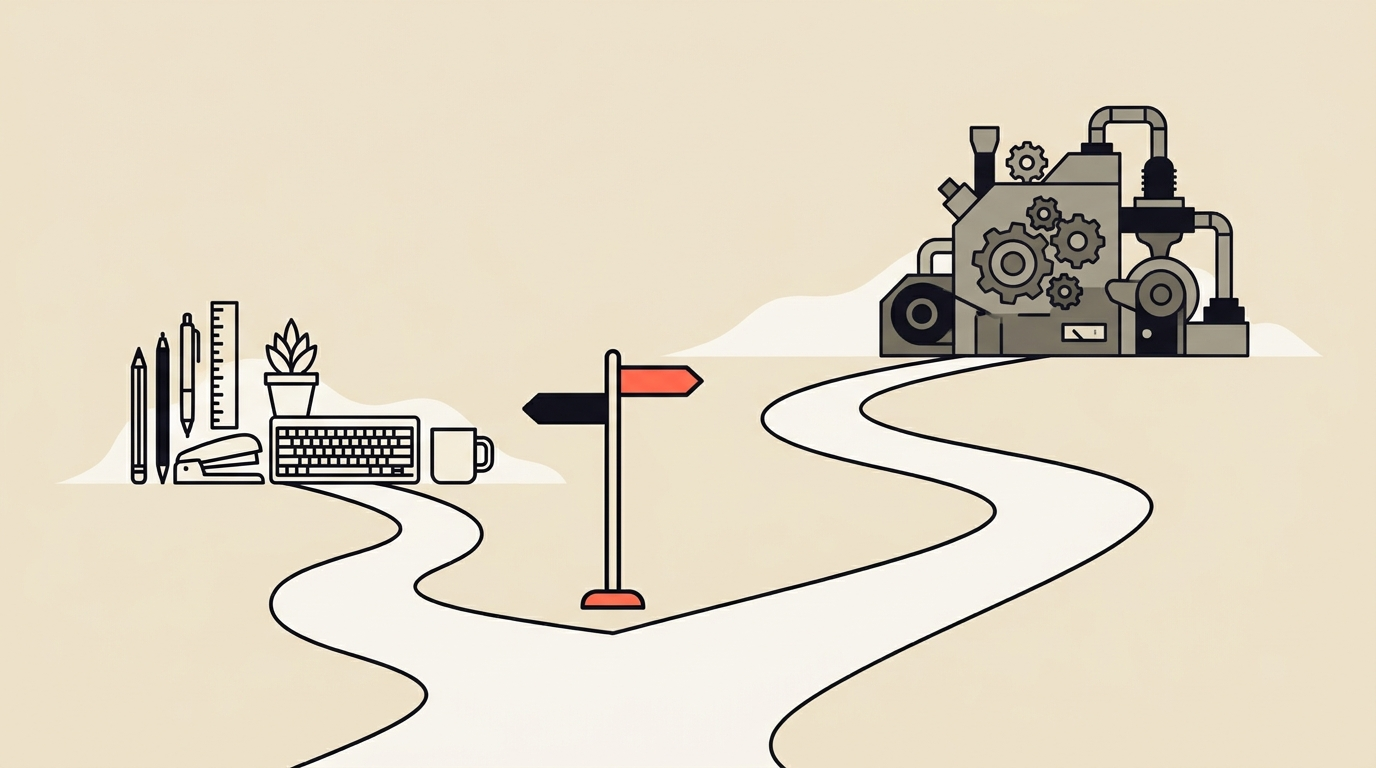
None of this means technical skills are never needed. There is a line, and it is worth knowing where it sits.
You can do without technical help for everyday use: drafting, summarising, research, customer replies, spreadsheets and simple automations. You will want expert help when you connect AI to your own systems, build something custom for customers, or fine-tune a model on your own data. That is the bespoke territory only one in ten SMEs are in. Getting security and data protection right is also worth a professional eye once AI touches customer data.
The rule of thumb: start off the shelf, prove the use case, and only pay for technical work once you know what the tool is worth to you. Paying for a custom build before you have used the everyday tools is the expensive way round.
The bottom line
You do not need coding for AI, and the firms getting value from it are the proof. If you can write a clear email, you have the core skill already. The owners winning with AI are not the technical ones. They are the ones who started.
Want to explore AI for your business?
Book a free discovery call to discuss how AI can streamline your operations and unlock new opportunities.
calendar_today Book a discovery callEnjoyed this? Get The Boardroom AI Brief.
Every Tuesday, the 10 AI developments that actually matter for SMEs. One short email. Free.
Free · no spam · unsubscribe any time

// WRITTEN BY
James Anderson
AI and full-stack engineer helping SME owners understand and implement AI. Founder of AI in Business and host of the AI in Business channel on YouTube.
Learn more about James →[ MORE ] RELATED READING
You might also like.



// NEXT MOVE
Get the AI news that matters, every week.
Join The Boardroom AI Brief. One free email every Tuesday: the AI developments that matter for your business, rated for relevance and explained in plain English.