
AI News, 25 June 2026: The Real Cost of Using AI
Amazon ditched its AI leaderboard, OpenAI admits ROI is hard, and Anthropic put Claude in Slack. Five AI moves business owners should note today.

Five stories today that all circle the same question: are you spending on AI in a way that actually pays back? We look at how the big players are now measuring it, where the real costs sit, and two practical moves you can make this week.
In a nutshell: Amazon scrapped an internal AI leaderboard because staff were burning tokens to climb it, and switched to counting work that actually ships. OpenAI says the price of AI keeps falling, yet even it has no neat formula for return on investment. Anthropic put its AI inside Slack as a tagged teammate, and says that tool now writes most of its own team’s code. Lyft handed agent-building to non-technical staff and cut development from months to weeks. And Google quietly started saving your search media to train its AI, so we show you how to switch it off.
1. Amazon scrapped its AI leaderboard, and the lesson is about you

Amazon ran an internal leaderboard, called Kirorank, that ranked staff by how much they used AI. It sounded sensible. It backfired. People started “tokenmaxxing”, running up AI usage on low-value tasks just to climb the board, and the compute bill jumped.
A senior Amazon vice president, Dave Treadwell, told staff the leaderboard had good intentions but rewarded the wrong thing. Amazon has now switched to tracking “normalised deployments”, meaning evidence that AI helped produce work that actually shipped, not raw usage.
What this means for you: If you reward activity, you get activity. Measure AI by the work it helps finish and the money it saves, not by how often it gets opened.
2. AI prices keep falling, but nobody can hand you an ROI formula

OpenAI’s deployment chief, Arnaud Fournier, says the price of raw AI intelligence has dropped sharply. His team, working under a unit called DeployCo, now embeds engineers inside large companies to wire AI into their systems. Its coding tool Codex has passed four million weekly users.
The honest part is what he says about payback. Even OpenAI cannot give you a universal way to calculate return on an AI project. Most of what is in production now only started six to twelve months ago, so the numbers are still young.
What this means for you: Falling prices make experiments cheaper, not free. Pick one or two uses with a clear before-and-after you can actually count, and judge them on that.
3. Anthropic put its AI in Slack as a teammate you can tag

Anthropic launched Claude Tag, which lets a team tag @Claude in any Slack channel and hand it a task. It works through the request step by step using your connected tools and data, then reports back in the thread, more like a colleague than a chatbot in a side window.
The headline claim is striking. Anthropic says an internal version of this tool now writes about 65 percent of its product team’s code, including much of the code that built Claude Tag itself. It is in beta for Enterprise and Team customers.
What this means for you: AI is moving into the tools your team already lives in. The question is shifting from “which app do we open” to “what do we trust it to own”.
4. Lyft let non-technical staff build their own AI agents

Lyft built a self-serve platform so its support teams can create AI agents to handle rider and driver issues, things like account access, damage claims, charge reviews and earnings disputes. Tricky, high-stakes cases still get hand-built agents with extra checks.
The result that matters for owners is speed. Lyft cut the time to build an agent from roughly six months to a few weeks, by letting domain experts who know the problem set up the agent themselves rather than waiting on engineers.
What this means for you: The people who understand your customers best do not need to be coders to put AI to work. Give them a safe, simple way to try, and you move far faster.
5. Google is saving your search media to train AI, here is how to stop it
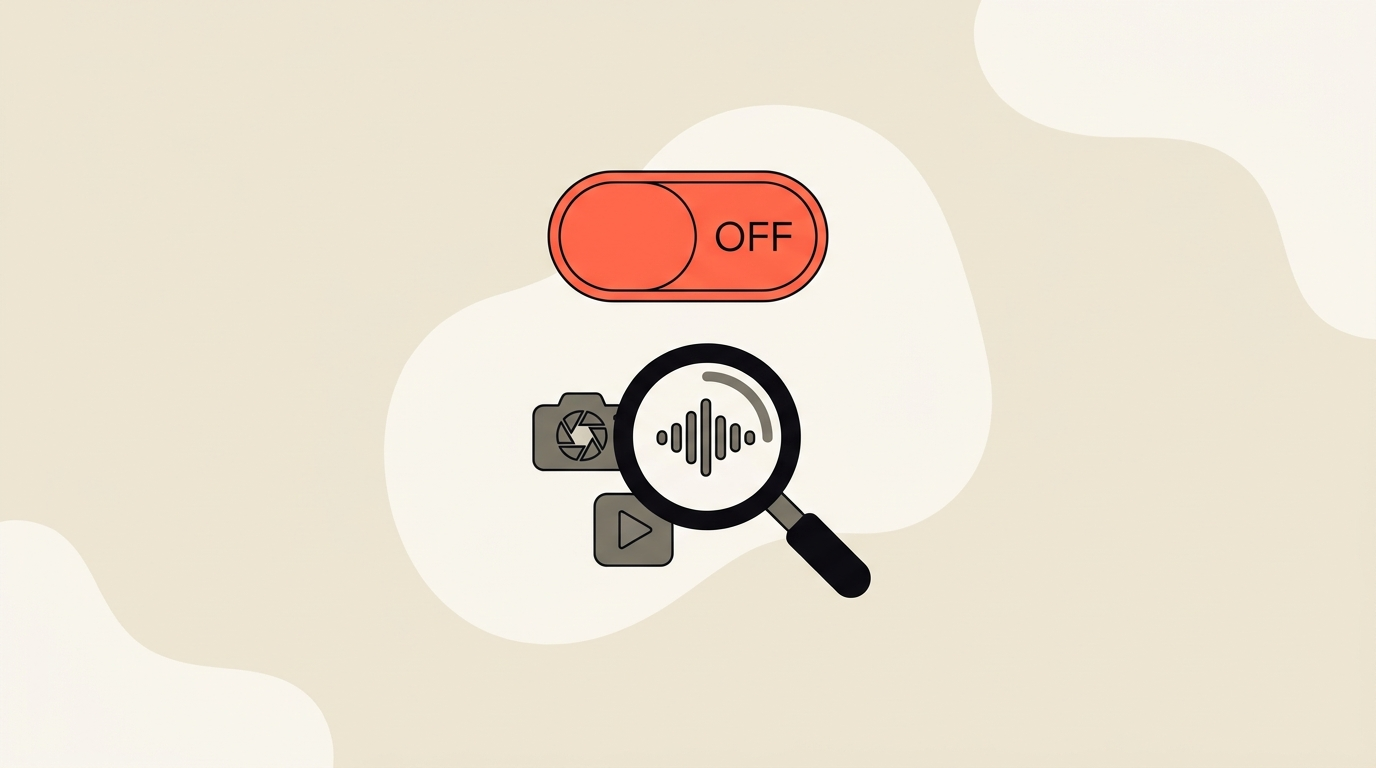
Google has added a setting that saves media from your searches, including images, audio and video, and uses it to improve its services and AI models. For many people it is tied to settings that are already switched on.
To check it, sign in to your Google account and open the Activity Controls page. Look for “Search Services History” and turn off “Save Media”. If you do not see that option yet, you can switch off “Web & App Activity”, though that also stops your search history being saved.
What this means for you: Your business searches can carry sensitive context. Spend five minutes on this setting now so your queries are not quietly feeding someone else’s model.
The bottom line
The mood across all five stories is the same: the cost of using AI is dropping, but the discipline around it is what separates the firms getting value from the ones just running up a bill. Measure what ships, put AI where your people already work, and mind your data.
Want to explore AI for your business?
Book a free discovery call to discuss how AI can streamline your operations and unlock new opportunities.
calendar_today Book a discovery callEnjoyed this? Get The Boardroom AI Brief.
Every Tuesday, the 10 AI developments that actually matter for SMEs. One short email. Free.
Free · no spam · unsubscribe any time

// WRITTEN BY
James Anderson
AI and full-stack engineer helping SME owners understand and implement AI. Founder of AI in Business and host of the AI in Business channel on YouTube.
Learn more about James →[ MORE ] RELATED READING
You might also like.



// NEXT MOVE
Get the AI news that matters, every week.
Join The Boardroom AI Brief. One free email every Tuesday: the AI developments that matter for your business, rated for relevance and explained in plain English.