
AI News Roundup, 6 June 2026: The Five Stories Worth Your Time
The five AI stories that matter for business owners today: why agents are still stuck in pilots, Microsoft cutting the cord with OpenAI, the first state lawsuit against ChatGPT, and a security hole worth knowing about.

A lot happened in AI yesterday, and most of it is noise. Here are the five stories a busy business owner actually needs to know about, in about five minutes. No hype, just what changed and why it matters to you.
In a nutshell: The gap between AI demos and AI that actually works keeps showing up everywhere, with most companies still stuck running pilots that never reach production. Microsoft has formally split from OpenAI to build its own models, which gives you more choice and more leverage. And the consequences of moving fast are arriving too, with the first US state suing the maker of ChatGPT and a fresh reminder that AI support tools can be turned against you.
1. Most “AI agent” projects never make it past the pilot

A recent Forrester survey of enterprise leaders, reported by The Register, found that roughly 78 percent of companies have AI agent pilots running, but only about 14 percent have them working at real scale. The hype says agents are taking over. The reality is that most of them are still demos.
What this means for you: if you have felt behind because you have not rolled out an army of AI agents, you are not behind. You are normal. The companies winning are the ones picking one boring, repetitive job and making the AI do that one thing reliably.
2. Your AI agents are not sharing what they learn

A useful piece from VentureBeat points out a quiet flaw in how teams use AI. When one person corrects an agent, gives it a better prompt, or teaches it the right way to do something, that improvement usually stays with that one person. The rest of the team starts from scratch.
What this means for you: for a small business this is the difference between AI that gets smarter every week and AI that stays mediocre. The fix is simple and human. Write down the prompts and corrections that work, and share them. Treat good prompts like a recipe book the whole team can use.
3. Microsoft is now building its own AI, not just reselling OpenAI’s

For three years, Microsoft’s AI story was OpenAI’s story. That has changed. Microsoft’s AI chief Mustafa Suleyman said the company was “set free” from its contract with OpenAI about six months ago and is now building its own frontier models from scratch, reported by VentureBeat. At its Build event this month, Microsoft unveiled a family of its own models covering reasoning, code, images, transcription and voice.
What this means for you: competition is good for you. When the biggest software company you already pay for, through Office, Teams and Windows, builds its own AI, you get more options and better pricing power. You are no longer locked into one provider. Keep an eye on what shows up inside Copilot before you go and buy a separate AI subscription you might not need.
4. A US state is now suing the makers of ChatGPT
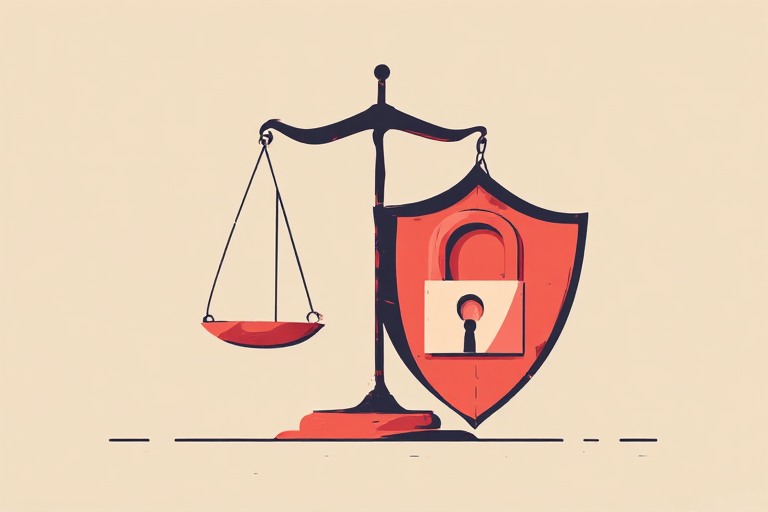
Florida has become the first US state to sue OpenAI and its CEO Sam Altman personally, treating ChatGPT as a defective product and a public nuisance, as covered by The Decoder. The case centres on harm to minors and missing safety checks.
What this means for you: you do not need to follow the legal detail. The lesson underneath it is that the tools are being held to a higher standard, and so are the people who deploy them. If you put a chatbot in front of your customers, you own how it behaves. Know what it can say, set clear limits, and do not assume “the AI did it” will protect you.
5. A hacker turned Meta’s own AI support tool against its users

Attackers used Meta’s AI customer support agent to help steal Instagram accounts, according to reporting flagged by MIT Technology Review. The AI helper you add to your website to “save time on support” is also a new door into your business.
What this means for you: if it can reset passwords, look up customer details, or take actions on an account, a clever attacker will try to trick it into doing exactly that. Before you switch on an AI agent that can act on real data, ask one question. What is the worst thing it could be talked into doing? Then make sure it simply cannot do that.
The bottom line
The story this week is not that AI is magic. It is that the easy demos are over and the hard, practical work of using AI safely and well is what separates the winners. Start small, share what works, and stay in control of the tools you let near your customers.
Want to explore AI for your business?
Book a free discovery call to discuss how AI can streamline your operations and unlock new opportunities.
calendar_today Book a discovery callEnjoyed this? Get The Boardroom AI Brief.
Every Tuesday, the 10 AI developments that actually matter for SMEs. One short email. Free.
Free · no spam · unsubscribe any time

// WRITTEN BY
James Anderson
AI and full-stack engineer helping SME owners understand and implement AI. Founder of AI in Business and host of the AI in Business channel on YouTube.
Learn more about James →[ MORE ] RELATED READING
You might also like.

// NEXT MOVE
Get the AI news that matters, every week.
Join The Boardroom AI Brief. One free email every Tuesday: the AI developments that matter for your business, rated for relevance and explained in plain English.