
Weekly AI News Roundup: What Matters for Your Business This Week
This week: a massive data breach through an AI chatbot, Shopify's AI shopping agents, and why businesses are building their own AI.

// WATCH THE EPISODE
AI in Business on YouTube
Prefer video? Watch this week's full breakdown on the AI in Business YouTube channel.
Introduction
This week, a company exposed 3.7 million customer records through an AI chatbot. That is a massive deal for any business owner using AI. Plus Shopify is preparing for AI to do your shopping for you, and a French company is letting businesses build their own AI without sending data to OpenAI.
Welcome to your weekly AI news roundup. Every week I condense the biggest AI stories into what actually matters for your business. No jargon, no hype, just what you need to know. Let’s get into it.
In a nutshell: Sears exposed 3.7 million customer records through an AI chatbot — a warning for every business using AI. Mistral AI launches a platform for building private AI without sending data to third parties. Shopify prepares for AI agents to shop on behalf of customers. And physical AI robots are moving into manufacturing.
The Data Breach Warning Every Business Owner Needs to Hear
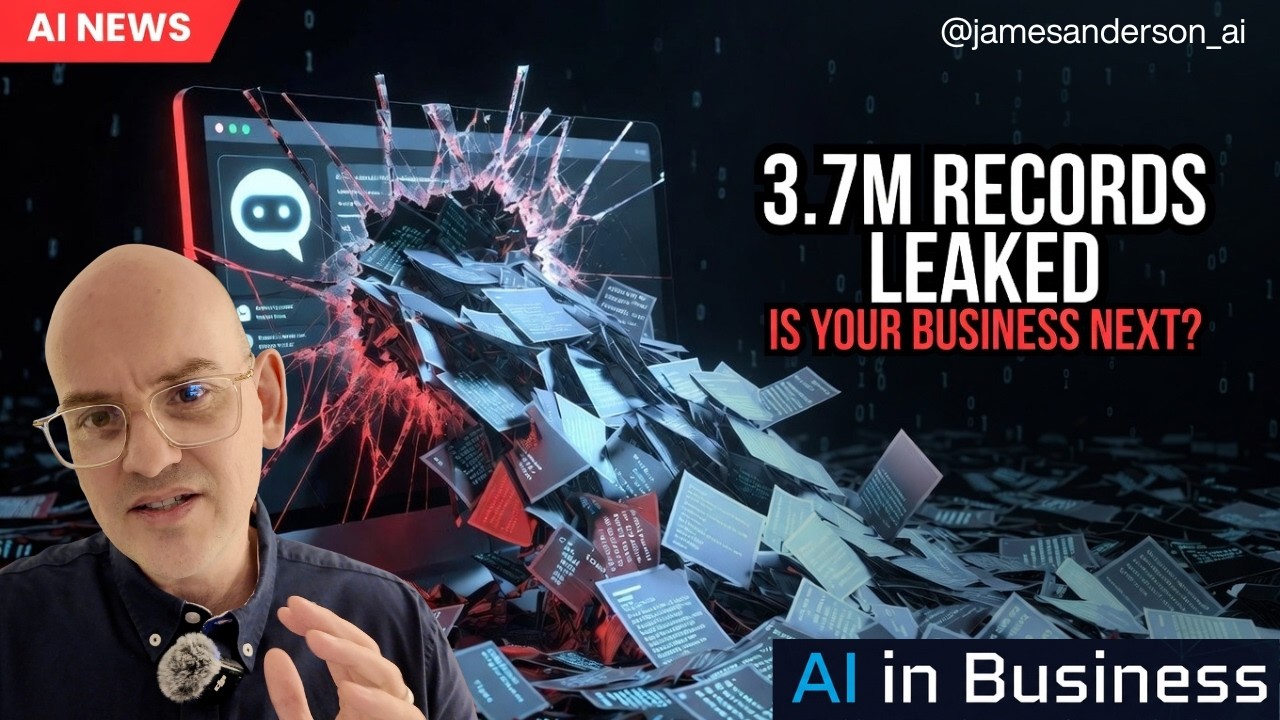
I am leading with this story because it is exactly why I do this channel. Sears Home Services, the appliance repair company, exposed 3.7 million customer records through their AI chatbot. A security researcher found three unsecured databases containing chat logs, audio recordings, and text transcripts. We are talking about names, phone numbers, home addresses, appliance details, repair appointments. All of it sitting there publicly accessible.
Some audio recordings were up to four hours long, capturing people having private conversations in their homes after they thought the call ended. The chatbot is called Samantha. It is an AI virtual voice agent. And the data was exposed from 2024 to 2026.
Now here is why this matters for you. Companies are rushing to deploy AI to save money, but they are taking shortcuts on security. That is the reality.
If you are using an AI chatbot with customer data, you need to think about how that data is protected. This is not an isolated incident. It is a warning.
The lesson is simple. Do not sacrifice security for convenience when it comes to AI. Before you deploy any AI chatbot that touches customer data, ask your provider three questions. Where is the data stored? Who has access? And what happens if there is a breach? If they cannot answer those clearly, walk away.
Why Businesses Are Building Their Own AI
Now this one is significant for businesses thinking about AI. French AI company Mistral just launched something called Forge, which lets enterprises build their own AI models trained on their own data.
Here is the thing. Most businesses using AI are sending their data to OpenAI or Anthropic. That means their internal documents, their customer information, their processes all sit on someone else’s servers. Mistral is saying you do not have to do that. You can build AI that stays completely within your own infrastructure.
The CEO Arthur Mensch is saying businesses should own their AI to keep control of their intellectual property. Mistral is already working with companies like Ericsson, the European Space Agency, and ASML, the Dutch chipmaker. They are on track to hit over a billion dollars in annual revenue this year.
For business owners, this matters if you have sensitive data. Think about it. If you are in finance, healthcare, or any regulated industry, the idea of keeping your AI in-house rather than sending everything to ChatGPT could be a game changer.
And this is something I am a massive advocate for. In my own businesses I run a local private LLM on our own server. It handles internal tasks without any data leaving our network. You do not need Mistral’s budget to do a version of this. You can set up a small local model for a few hundred quid and keep your sensitive information completely offline. It is early stage for Forge, but this is the direction the industry is moving and I think it is the right direction.

Shopify Is Preparing for AI to Do Your Shopping
Shopify is going all in on AI shopping agents. President Harley Finkelstein says they are preparing for a transformation where AI acts as a personal shopper for consumers.
His argument is interesting. He says current search engines show you what is popular or what pays to be at the top. But an AI agent that knows your preferences can find exactly what you want.
He gave the example of searching for running shoes. A regular search might show you Footlocker. But an agent that knows you prefer On running shoes will surface those instead.
And he made a point that I think resonates with a lot of people. He said the AI is not on commission. It is not trying to sell you something because it gets paid more. It just wants to show you what you are most likely to buy.
For Shopify merchants, this could mean better product discovery. And if you are running an e-commerce business on any platform, start thinking about how your products show up to AI agents, not just human shoppers. That is a different kind of SEO and it is coming fast.

Verifying Humans Behind AI Shopping Agents
Now this ties directly into the Shopify story. World, the company co-founded by Sam Altman that does iris scans for identity verification, just launched a tool to verify that a real human is behind AI shopping agents.
Here is the context. AI agents are increasingly browsing websites and buying things on behalf of users. That is convenient, but it also opens the door to fraud and spam at scale.
World has built AgentKit, which lets websites verify that an AI agent is acting on behalf of a verified human. The way it works is users register their AI agent with their World ID, which comes from scanning your iris with their Orb device. Then when the agent makes a purchase, the website knows a real human approved it.
For e-commerce business owners, this could matter because it gives you a way to trust AI-driven purchases or block suspicious ones. It is in beta right now and requires users to have a World ID scan, so it is not mainstream yet. But it shows you the infrastructure that is being built around agent commerce. This is the plumbing that makes the Shopify vision actually work.

New Tools for Creating Marketing Visuals
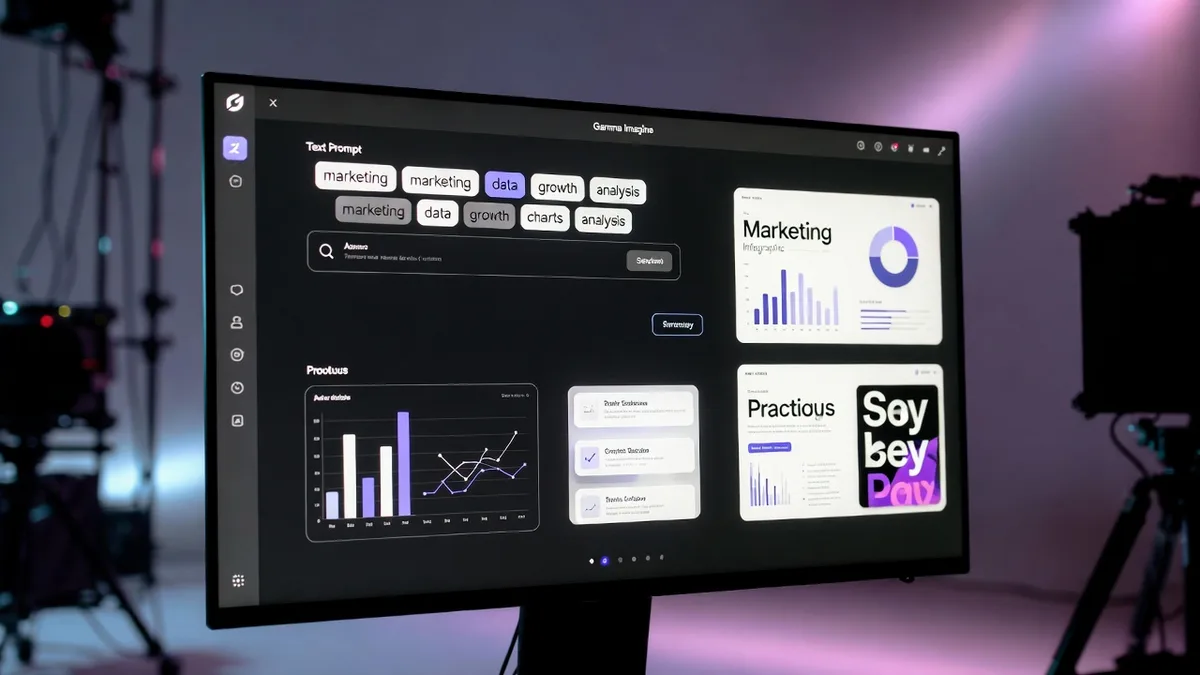
Gamma, the AI platform for creating presentations and websites, just launched image generation tools. They are called Gamma Imagine. You can now generate brand-specific images using text prompts. Charts, marketing collateral, social graphics, infographics. They have over 100 templates.
The company raised 68 million pounds last November at a 2.1 billion valuation and they are approaching 100 million users.
For SME owners, this is practical. If you need marketing visuals but you do not have a designer, this lets you generate them quickly. It integrates with tools like Zapier and ChatGPT.
The CEO said they are targeting the middle market between professional tools like Adobe and basic ones like PowerPoint. Knowledge workers who need visual content but do not have design resources. That sounds like a lot of small business owners I know.
Picsart’s New AI Agent Marketplace
Picsart, the design platform with over 130 million users, just launched an AI agent marketplace. You can now hire AI assistants to help with specific tasks.
There are four agents to start. Flair analyzes your Shopify store and suggests improvements. Resize Pro automatically resizes images for different platforms using AI to extend the frame rather than just cropping. Remix applies styles like vintage film or cyberpunk to your photo library. And Swap changes backgrounds in bulk.
You can chat with these agents on WhatsApp or Telegram. For content creators and social media managers, this is useful.
The key detail is you can set autonomy levels, so the AI asks for your approval before taking action. That is a smart feature. As AI agents become more capable, that human oversight is going to be important.
Physical AI Is Moving Into Manufacturing
Now this one is a bit more forward-looking but I think it matters for business owners thinking about the future. MIT Technology Review published a piece on why physical AI is becoming manufacturing’s next advantage.
For decades, manufacturers automated repetitive tasks. That delivered gains but it is not enough anymore. The next phase is intelligence that can operate in the physical world. Robots that can perceive, reason, and act in dynamic environments.
Microsoft and NVIDIA are working together on this. They are building infrastructure for physical AI at scale.
The key shift is from AI that analyses data to AI that works alongside humans on factory floors. Optimising production lines in real time, coordinating maintenance, adapting to supply disruptions.
The article makes an important point. Humans remain essential. AI executes, monitors, and recommends, while people provide intent, oversight, and judgment.
If you are in manufacturing or thinking about automation, this is worth paying attention to. The frontier is moving from software AI to physical AI.
Quick Stories Worth Knowing
A few quick stories worth knowing about.
Google announced that Personal Intelligence, their feature that connects Gemini to your Gmail, Photos, Calendar and Drive, is now available to all free US users. It lets Gemini pull information from across your Google ecosystem. Interesting, but US only for now and be careful what business data you connect to it.
Google has also rolled out Help Me Create across Docs, Sheets and Slides. If you are already paying for Google Workspace it is essentially free to use. It is a decent starting point if you want to dip your toes into AI assistance.
And Meta has expanded AI capabilities in Facebook Marketplace with automated replies and AI listing tools. If you sell on Marketplace, worth a look for saving time on customer enquiries.
Key Takeaways
- Security first: The Sears breach shows that deploying AI without proper security is a massive risk. Always ask where data is stored, who has access, and what happens in a breach.
- Consider private AI: If you handle sensitive data, look into local or private AI options. You do not need a huge budget to keep your data off external servers.
- Think about AI agents: E-commerce owners should start considering how their products appear to AI shopping agents, not just human shoppers.
- Human oversight matters: As AI agents become more capable, setting autonomy levels and maintaining approval workflows will be crucial.
- Watch physical AI: If you are in manufacturing, the shift from software AI to AI that works in the physical world is worth tracking.
Over to You
So the distilled takeaway this week. The theme is clear. AI is moving deeper into every part of how business gets done, from shopping to security to manufacturing. But the Sears breach is the story that should stick with you.
If you are deploying AI that touches customer data, security is not optional. It is the whole point. The practical advice remains the same. Pick one repetitive task, test a free AI tool on it, and always, always protect your customer data.
If that was useful, subscribe because I break this down every week. I am putting together a series of explainer videos that go deeper into the specific tools and trends that actually matter for your business. The core purpose of this channel stays the same, helping you as a business owner or operator increase your AI literacy and understanding so you can make AI work for your business.
No hype, no jargon, just what you need to know. See you next week.
Enjoyed this? Get The Boardroom AI Brief.
Every Tuesday, the 10 AI developments that actually matter for SMEs. One short email. Free.
Free · no spam · unsubscribe any time

// WRITTEN BY
James Anderson
AI and full-stack engineer helping SME owners understand and implement AI. Founder of AI in Business and host of the AI in Business channel on YouTube.
Learn more about James →[ MORE ] RELATED READING
You might also like.


// NEXT MOVE
Get the AI news that matters, every week.
Join The Boardroom AI Brief. One free email every Tuesday: the AI developments that matter for your business, rated for relevance and explained in plain English.